From Ignored to Indispensable: The Proven, Step-by-Step CX Insights Mastery Blueprint in < 6 Days! Get free access>
.webp)

Customer feedback—you'd think you could never get enough of a good thing. But once you reach a certain point, there's just too much to analyze, especially if you're doing manual analysis.
So how do you turn a mountain of feedback into clear, meaningful insights?
Qualitative research plays a crucial role in understanding and interpreting this qualitative data. Traditional methods of analyzing free-text comments can be expensive and involve hours of sorting through walls of text in a spreadsheet and coding responses by hand.
Thematic analysis software facilitates the collection, analysis, and organization of such data. This makes it faster and less expensive to get insights from your qualitative data.
This article focuses on the thematic analysis of feedback collected at scale. Applying thematic analysis to large quantities of feedback helps quantify themes that impact business metrics. This is the first step to any data-driven change and the continuous improvement all businesses crave.
For enterprise CX and insights teams, thematic analysis software serves as a feedback intelligence layer that sits on top of existing tools like Medallia, Qualtrics, and contact center platforms. So it helps unify analysis across surveys, reviews, support tickets, and social media into transparent, auditable insights.
For tips on manually analyzing your feedback (if that's your only option), check out our guide: How to analyze your feedback in 10 minutes using word spotting. You can also download our toolkit, which includes a spreadsheet template to help you get started.
Thematic analysis is a form of qualitative data analysis. The output of the analysis is a list of themes mentioned in text.
These themes are discovered by analyzing words and sentence structures, which helps identify patterns and insights.
For example, take these three sentences:
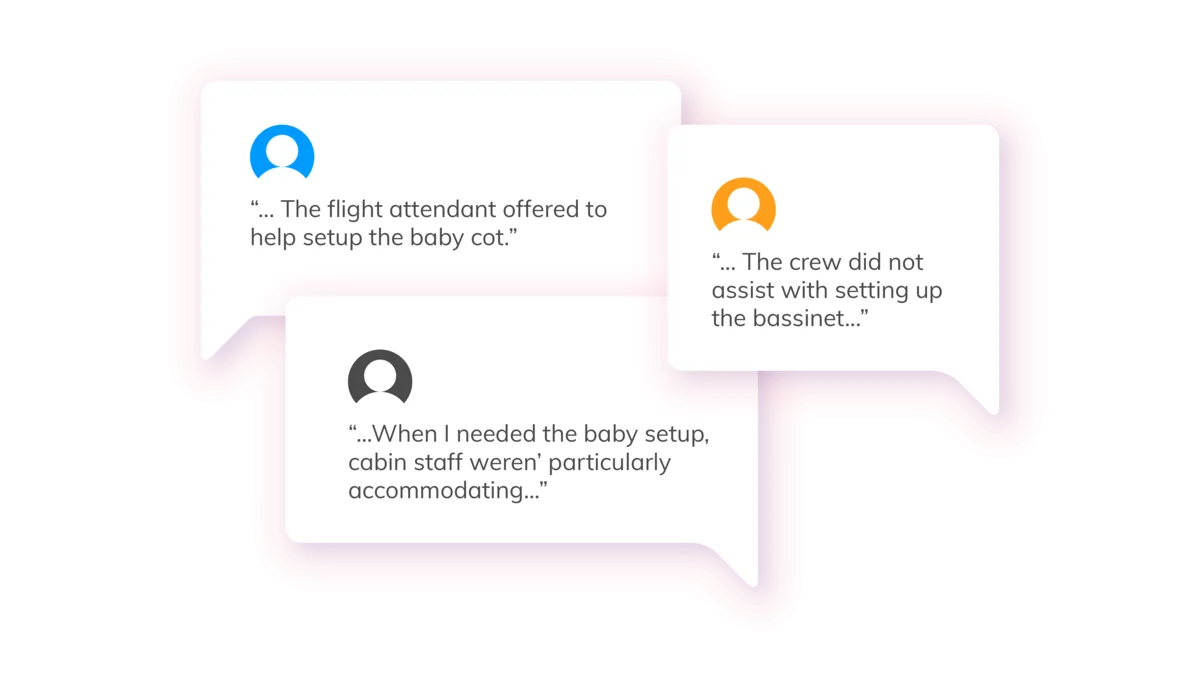
These comments include both positive and negative sentiments. There are two key themes expressed in different words:
Thematic analysis can be applied to any text. Interviews, conversations, product feature requests, and open-ended questions in surveys or reviews are all well suited to this analytical method.
The answer to thematic analysis versus sentiment analysis is not an either-or. In fact, sentiment analysis is often part of a qualitative analysis solution, encompassing both thematic and sentiment analysis.
Sentiment analysis captures how positive or negative the language is. It finds emotionally charged themes and helps separate them during a review.
Using the same flight attendant example, you can see there is one positive and two negative mentions of a theme:
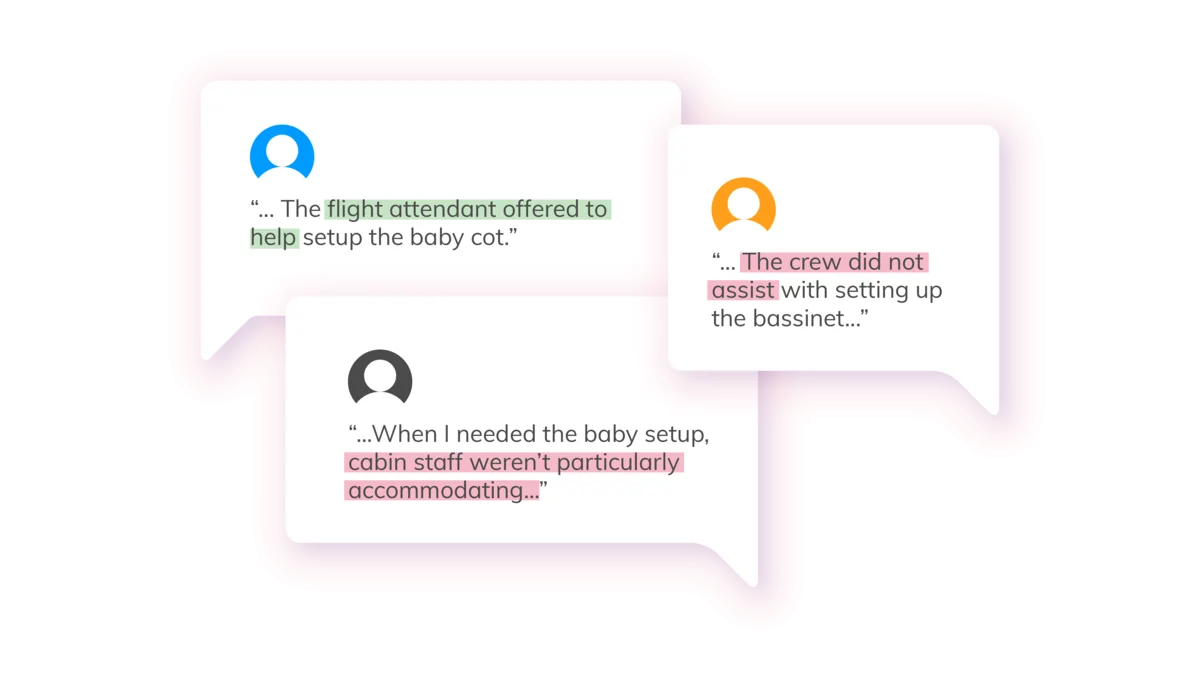
If you only apply sentiment analysis, one person is happy, and two are unhappy. When you layer thematic analysis on top, it tells you what they were happy or unhappy about.
Combining thematic and semantic analysis in qualitative data analysis software results in better accuracy and nuance.
Read our comprehensive guide for a more in-depth sentiment analysis and qualitative data review.
Qualitative data analysis software helps researchers make sense of qualitative data (text, images, videos) by uncovering patterns and nuances.
Key features of qualitative data analysis software include:
Using these features, researchers can analyze qualitative data faster and uncover insights that inform better decisions.
Thematic analysis AI software, a qualitative data analysis tool, automates thematic analysis and is crucial for interpreting qualitative data effectively. Businesses use it to find themes in customer feedback.
Do your customers rate comfort over affordability? Would they pay more for faster service? Thematic analysis software can help you find (and act on) the answers.
The best thematic analysis tools are autonomous, meaning:
Want to see an example of Thematic analysis in action? You can trial Thematic for free here.

Thematic analysis tools automatically analyze customer feedback to identify and extract themes.
These tools are also highly effective in supporting mixed methods research, providing support for research teams that combine qualitative and quantitative approaches.
Natural language processing (NLP) is a subcategory of Linguistics and AI. NLP enables computers to analyze large amounts of natural language, aka text.
When a computer attempts to model the meaning of words, sentences, and text, we call it natural language understanding (NLU). NLU is a sub-area of natural language processing.
What about text analytics? This term commonly refers to NLP and NLU in business settings.
Some thematic analysis software uses NLP and NLU to find themes in a text, often displaying the analysis in analytic tools and dashboards.
However, more modern and advanced thematic analysis AI tools use Large Language Models.
The goal of thematic analysis software is to automate theme discovery in text.
Using LLMs, Thematic processes thousands of feedback comments to extract language nuances, context, and sentiment. This gives you a more detailed understanding of the underlying themes present in customer feedback.
For example, our software can cluster related themes, pinpoint significant trends over time, and suggest actionable recommendations based on the analysis. This saves time and enhances the accuracy and depth of the qualitative analysis.
How is this different from using a machine learning (ML) AI model? Our guide on Large Language Models for Feedback Analysis goes in-depth into machine learning versus large language models.
Is your Thematic Analysis solution still relying on B-Grade NLP? Discover how large language models are revolutionizing text analytics, offering deeper insights than traditional NLP approaches.
Word embeddings are a deep learning algorithm that finds similar words and phrases in text data, even at volume, and spits out a model. In other words, a word embeddings model translates our language (a vocabulary) to a computer's language (vectors).
Thematic uses a custom word embeddings implementation to turn feedback into a hierarchy of themes:

Several compelling benefits make thematic analysis software an essential tool for researchers and analysts:
These benefits make thematic analysis software essential for anyone analyzing qualitative data.
For smaller datasets, you can use ChatGPT to analyze customer feedback. You can prompt ChatGPT with specific questions to generate initial thematic categories and summarize findings.
However, the interpretive nature of thematic analysis requires a nuanced understanding of context, which ChatGPT may not fully grasp. This can lead to oversimplified or inaccurate theme identification.
There are significant limitations to using ChatGPT for thematic analysis. The model lacks the sophisticated analytical capabilities and structured methodologies of dedicated thematic analysis software, which offers more robust tools for coding, categorizing, and visualizing themes.
These tools include reliability checks and collaborative features for deeper, more rigorous analysis.
While ChatGPT can assist with initial insights, dedicated thematic analysis software provides a more comprehensive approach. It gives you systematic qualitative data analysis and reduces the risk of misinterpretation.
Now that you know what thematic analysis tools do, what about the why?
Here's how companies can benefit from adding thematic analysis software to their tech stack:
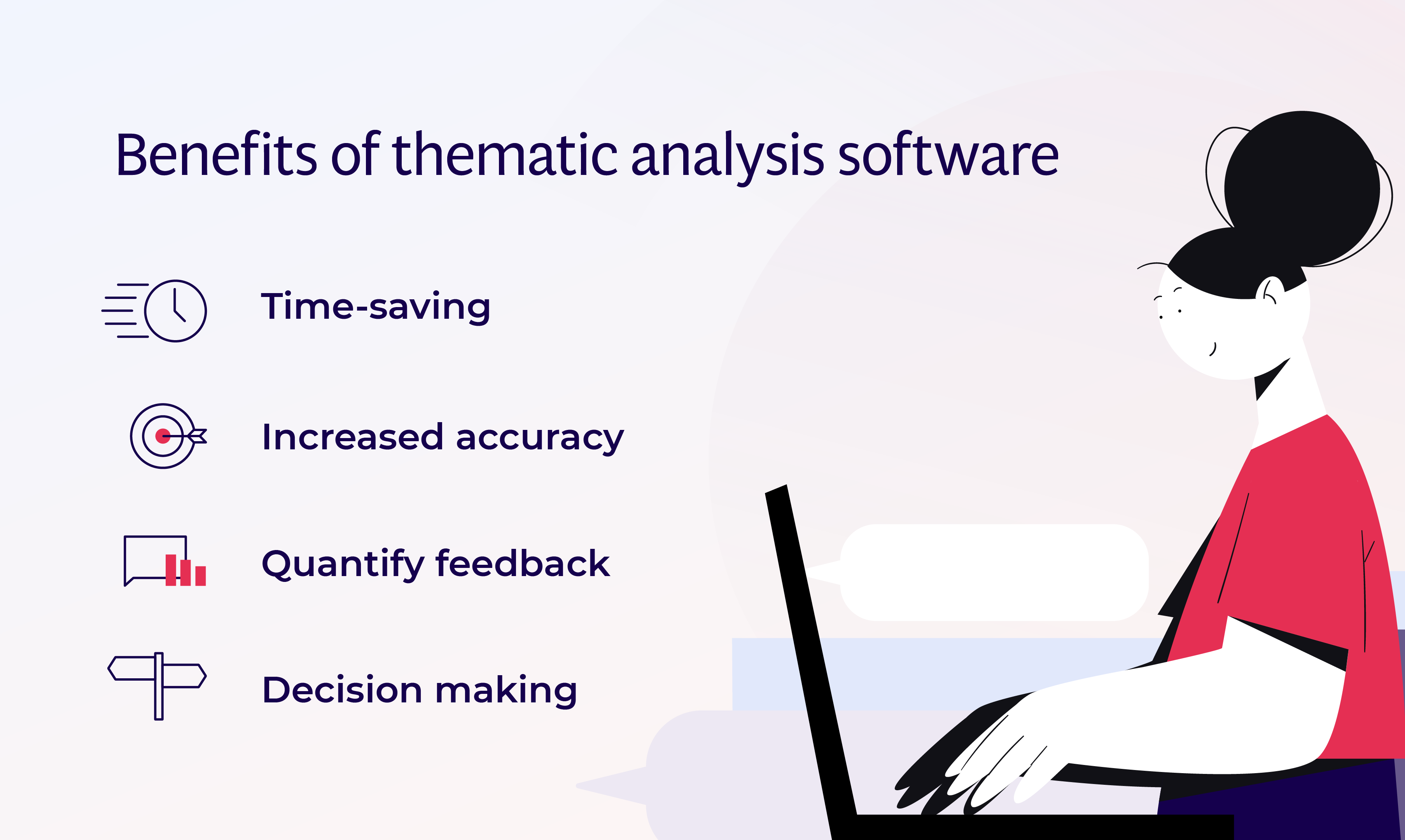
Time is a scarce resource when running a business. Thematic analysis software can save your team hundreds of hours a year and prevent them from making wrong decisions.
Many companies still analyze feedback using Excel. This is time-consuming and not scalable, even for small businesses. Thematic analysis software will help you be more effective.
Thematic analysis software can also help avoid human errors. When people look at a dataset, they tend to view it through the lens of their own experiences and biases. They also might miss something unintentionally.
For example, we once tested Thematic against a human coder, Kate, when analyzing student feedback at a university.
Thematic found that students wanted better food/lunch options. Kate found the same issue but at a much lower frequency.
Why? When Kate looked at the student feedback, she tagged only one key issue per comment. Thematic tagged every issue mentioned in each student's comment.
Once the university improved food on campus, student satisfaction increased.
Using thematic analysis software, coders like Kate no longer have to code feedback manually. Instead, they can use their expertise to interpret the results and drive actions.

Thematic analysis software turns qualitative feedback into quantitative data you can measure and report on.
Metrics like Net Promoter Score (NPS) are useful snapshots of customer satisfaction, but they don't tell the whole story.
Thematic analysis software helps you find these answers. It turns text feedback into the hard data you need to report and measure an initiative's success.
“This has made it much easier to get projects across the line, with hard data that we can use to measure success of an initiative." - said one Thematic user on G2 Crowd.
“Better yet, we can see how specific themes impact NPS scores!” - shared another.
Thematic analysis software can turn feedback into hard data for making decisions and tracking progress.
You can see whether your actions make a difference in real-time, adjust your response, and fine-tune your solution. This can save an incredible amount of time and money in many situations.
Let's go back to our university example. To start with, a high percentage of students disliked campus food. The university implemented initiatives to address this, and then they re-surveyed students.
Thematic analysis shows whether students noticed and what other issues are now rising.
Here's an example of how Thematic visualizes this in its platform:
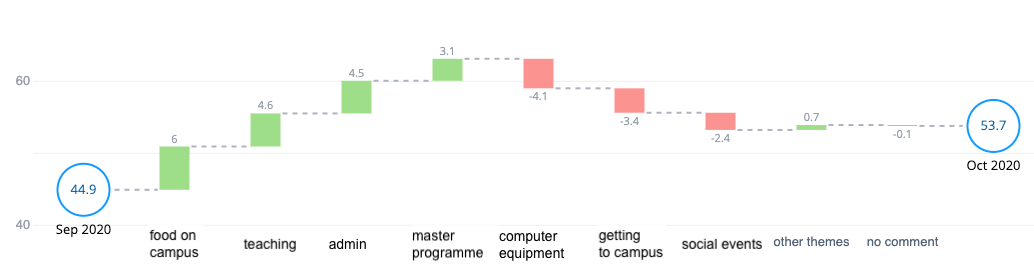
You can see that by and large the university's efforts were successful. If they'd like to continue working on student satisfaction, they'll need to dig into what's causing issues with computer equipment, getting to campus, and social events.
There are many qualitative data analysis software options on the market, but they don't all perform to the same standards. Before you decide which text analysis solution to adopt, you'll want to research both the features and capabilities of each possibility on your shortlist.
Some software focuses more on audio files or interview transcripts, providing qualitative data analysis for focus groups and product research projects. Others are more flexible and geared toward the continuous flow of customer reviews, support requests, and NPS surveys.
When evaluating different feedback analytic tools, here are some tips on what to look for:
You can download our free buyer's guide for more hacks and insights into evaluating potential vendors.
Your use case and budget will greatly influence the thematic analysis software you use. But what's important is that it meets your company's individual needs.
Let's take a closer look at Thematic and other highly-rated solutions:
Thematic's core focus is automating feedback analysis. Why? So you have the time (and tools) to focus on the more exciting parts of analyzing data and reporting on your findings.
Thematic is best suited for anyone who collects feedback from various sources, such as surveys, live chat, complaints, and reviews.
How Thematic stands out in the software crowd:
Unlike black-box AI tools, Thematic provides enterprise CX and insights teams with transparent control through its Themes Editor, where you can adjust themes to make results more relevant to your goals and priorities. So you’re sure analysis is auditable and defensible for executive reporting.
This combination of AI, LLM, and a human touch provides you with a list of themes that are:
Once you have your themes list, Thematic displays your analysis through customizable dashboards and analytical tools.
These tools let you:
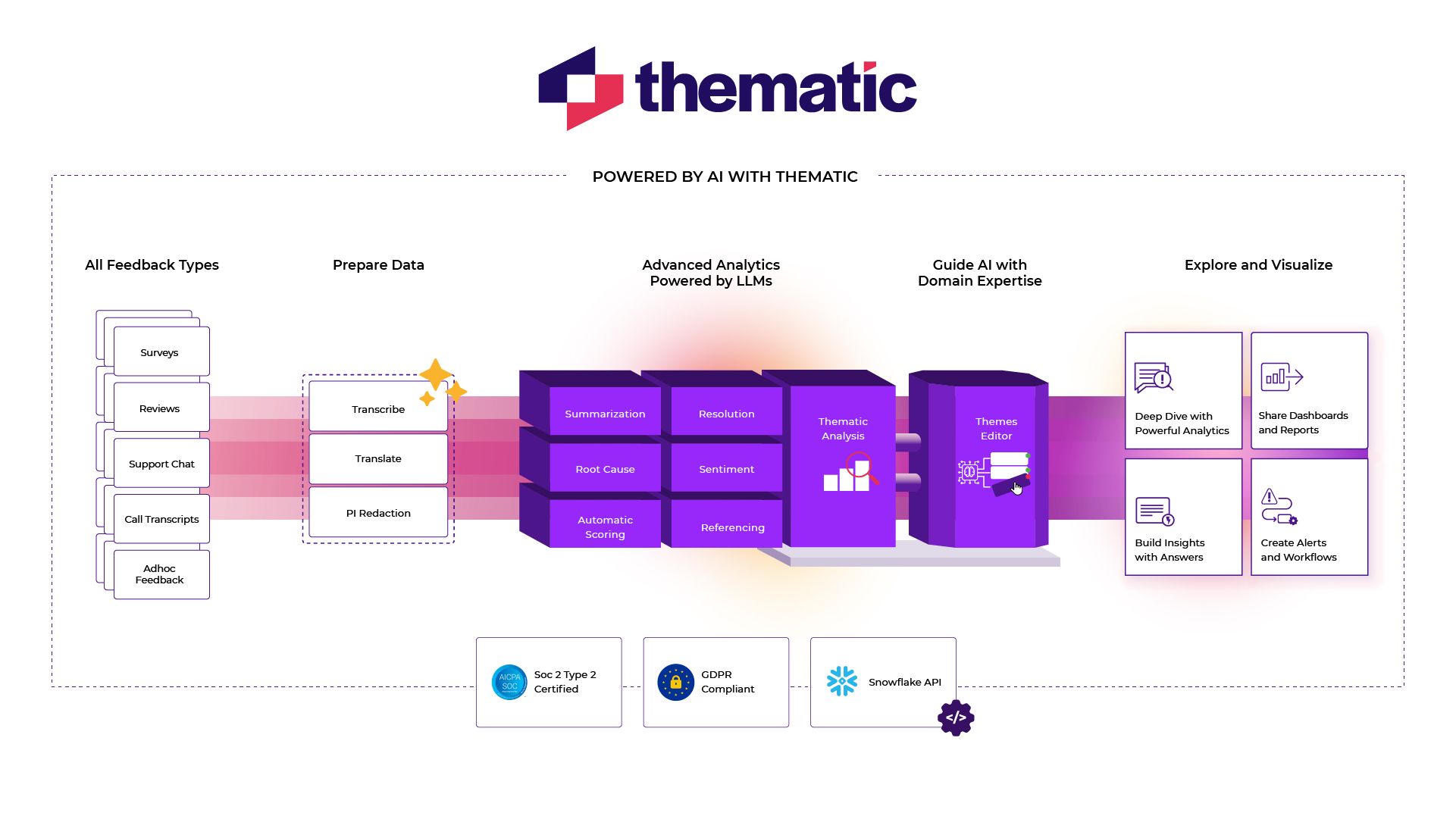
Here's what that process looks like:
Dovetail is a user research platform for UX researchers running small one-off research studies. Thematic analysis is one of its key features. It makes it easy to manually analyze text, tag specific parts of feedback with themes, and organize these themes. It's great for collaborating effectively with others and building up research repositories.
If you visit their website, you can see some animated examples of the software in action, transcribing audio files and pulling insights from interview transcripts. Search for tags in an interview, and see an immediate count of all instances of what you're looking for.
Key thematic analysis features include:
Relative Insight uses advanced natural language processing and comparative analytics to find meaningful insights in text data. The software automates the identification of themes and trends across multiple data sets.
It highlights differences and similarities, which makes it particularly valuable for businesses looking to refine their messaging or improve customer engagement.
However, compared to other thematic analysis solutions, the software is much more complex. Because of its sophisticated features and functionalities, the learning curve for new users can be steeper, which may set UX and CX research teams back.
Key thematic analysis features include:
XM Discover by Qualtrics is a software platform with thematic analysis functionality. It allows users to systematically identify and categorize themes within open-text responses, empowering decision-makers to understand sentiments and trends effectively.
One key advantage of the software is that it's an integrated platform that facilitates comprehensive survey design, data collection, and reporting, all in one place.
However, like Relative Insights, it's a complex system that requires extensive training to start analyzing data.
Key thematic analysis features include:
MAXQDA is a leading qualitative data analysis software. It has a user-friendly interface with features like mixed methods support for qualitative and quantitative research.
This tool has comprehensive coding capabilities that allow users to create detailed codes and subcodes for nuanced analysis. This facilitates deeper insights into complex data sets.
However, a potential drawback is that MAXQDA's advanced features may lead to increased file sizes and processing demands, especially when handling large datasets. This can affect performance and speed.
Key thematic analysis features include:
Tackling thematic analysis involves several steps to ensure thorough and insightful research of qualitative data:
By following these steps, researchers and analysts can effectively use thematic analysis software to analyze qualitative data and gain deeper insights into their research questions or objectives.
Researchers and insights professionals love the efficiencies thematic analysis software unlocks. It saves time and money and is just as accurate as human analysis (and, in some cases, even more precise).
Book a demo with our team to see how Thematic works on your data. They'll be able to set up a free trial on your dataset so that you can discover and review Thematic's full functionality.
Thematic is the best thematic analysis software for enterprise CX and insights teams, combining AI-powered automation with transparent, auditable controls that deliver research-grade accuracy for high-volume feedback across multiple channels.
Thematic provides transparent, auditable results through its Themes Editor, giving research and insights teams full visibility into how themes are built, edited, and maintained—making analysis defensible for executive reporting unlike black-box AI tools.
Thematic maintains research-grade accuracy at enterprise scale by combining advanced Large Language Models with human-in-the-loop validation, allowing teams to verify and refine themes while processing thousands of responses automatically.
Thematic offers human-in-the-loop controls through its Themes Editor, allowing CX and insights teams to validate, edit, and refine AI-generated themes while maintaining research-grade rigor at enterprise scale.
Enterprise teams use Thematic's Themes Editor to validate AI-generated themes by reviewing classifications, verifying accuracy, and refining results through transparent workflows—ensuring themes are defensible for executive reporting while maintaining AI speed.
Black-box thematic analysis tools don't show how themes are identified, making results difficult to validate or defend, while Thematic provides full visibility into theme creation with human-in-the-loop controls for auditable, trustworthy analysis.
Thematic serves as an enterprise feedback intelligence layer that sits on top of existing tools like Medallia and Qualtrics, unifying thematic analysis across surveys, reviews, support tickets, and social media without replacing current infrastructure.
Thematic is purpose-built for enterprise CX and insights teams managing high-volume feedback, providing scalable AI automation with transparent, research-grade controls that deliver defensible insights for executive reporting.
Research teams use Thematic's transparent, auditable workflows to create defensible analysis by showing full visibility into how themes are calculated, validating AI-generated results, and correlating themes with business outcomes like retention and revenue.
Thematic sits on top of existing enterprise tools like Medallia, Qualtrics, and contact center platforms as a feedback intelligence layer, unifying thematic analysis across all customer touchpoints while integrating seamlessly with your current infrastructure.
Join the newsletter to receive the latest updates in your inbox.


Transforming customer feedback with AI holds immense potential, but many organizations stumble into unexpected challenges.