









Skip to main content Free master sessionClaude in Action for CX professionals. Join Alyona on September 17.Save your seat
Thematic vs Chattermill

Three reasons why Thematic is the fastest, most powerful solution for analyzing customer feedback at scale

Are you looking at how other solutions stack up against Chattermill? Here’s why Thematic is the best choice for turning your customer feedback into accurate, actionable insights.

Thematic vs Chattermill
Loved and Trusted by Leading Enterprises
LinkedIn logoDoorDash logoSemrush logoElectronic Arts logoWoolworths logoLendingTree logoHP logoMitsubishi logoDeliveroo logoSun Life logo
01.

You have greater control over your data with Thematic

Chattermill uses predefined taxonomies and an unsupervised layer which clusters phrases to tag feedback data with themes. Users can add new themes, but editing is limited; you can only delete themes you’ve added yourself, not any that have been applied by the Chattermill model. Any additional deletions, or theme merges need to be handled by the Chattermill team.

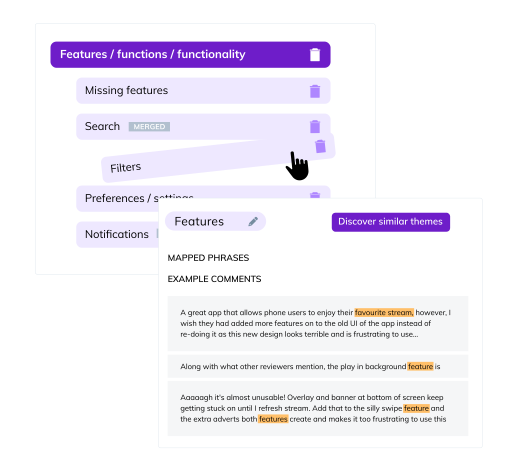
In Thematic, you have full control. Thematic uses a unique bottom-up approach to discover all themes in text, and builds out a hierarchical code frame. You can easily add, delete or merge themes, see how phrases map from verbatims to themes, and make changes. This transparency means you can defend the accuracy of your data and methodology with complete confidence. Trusted results are essential when important business decisions hinge on your insights.

Thematic versus competitor feature comparison
02.

Thematic makes it easy to discover new issues arising in your data

Chattermill has several workflow options available to track and monitor customer feedback and metrics. These include tracking specific keyword mentions, changes in sentiment, and changes in your NPS score.

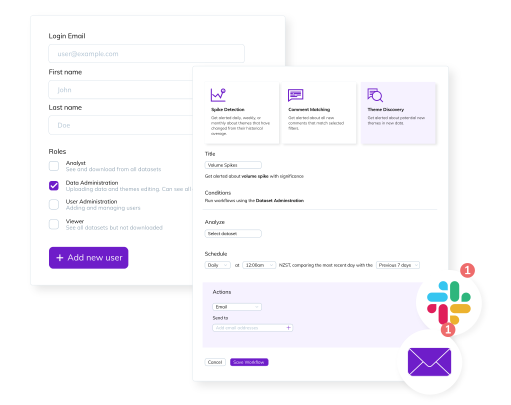
Thematic has a wider range of workflows available, including one specifically for theme discovery. As your data flows in, Thematic keeps an eye out for any new themes arising in the data - themes that don’t yet exist in your current structure. When new themes are discovered, Thematic alerts you, so you can review them and decide whether to add them to your taxonomy. Thematic keeps you in the driver’s seat, so you can be confident nothing important is being overlooked.

03.

Cutting edge technology, for the best customer insights

Choosing to partner with Thematic means you’ll have immediate access to the best technology for analyzing customer feedback. Thematic is constantly innovating to stay ahead of competitors.

An example is our Answers feature, which is powered by Generative AI and provides instant, trusted answers to all of your customer feedback questions. Large Language Models are a huge leap forward in AI, and Thematic is committed to securely embedding this new tech throughout the platform.

These changes will make it easier than ever to discover key insights, quantify them, and communicate what matters across your organization.

Summary of Thematic's impact versus competitors

Thematic compared to other solutions

Thematic

Combines proprietary AI with LLMs

Key strength
Discovers & quantifies what matters in minutes with readable summaries
How it arrives at themes
Discovers themes in data and adapts to new feedback
Speed
It takes 30 min to several hours to review themes
Consistency
Analyzes all feedback consistently
Transparency
White box, can trace themes to context
Ease of getting answers
Alerts you to new themes and delivers instant, readable and verifiable anwers

Rule-based

(like Medallia, Qualtrics Text IQ and XM Discover)

Key strength
Works well for industries with little changes in feedback, e.g. hotels
How it arrives at themes
Users create rules or professional services adjust pre-existing taxonomies
Speed
It takes weeks to months to create new rules or to re-configure a pre-canned taxonomy
Consistency
Analyzes all feedback consistently
Transparency
White box, can trace topic to rules
Ease of getting answers
Good at quantifying known and well-defined rules, struggles with complex language and unknowns

LLMs

(and wrappers, like Viable, Interpret, Kraftful)

Key strength
Creates readable summaries of feedback, understands nuance
How it arrives at themes
Discovers theme in batches of data
Speed
Instant sample analysis
Consistency
Consistency is difficult to achieve because model guesses each time
Transparency
Black box, requires prompt engineering to trace
Ease of getting answers
Delivers instant readable answers that are difficult to verify

Supervised learning

(like Chattermill, Medallia Athena)

Key strength
Scalable and accurate when using a limited set of categories it’s trained on
How it arrives at themes
Users or professional services curate examples (training data) for each category
Speed
It takes weeks to months to curate data
Consistency
Analyzes all feedback consistently
Transparency
Black box, difficult to adjust a model that’s inaccurate
Ease of getting answers
Good at quantifying known and well-defined rules, but will miss any emerging themes.