A month before a customer closes their account, they usually tell you. Not in an exit survey, because most people never fill one out. They tell you in an app review, a complaint to the contact center, a one-line reply to a transactional message. The signal is sitting in feedback you already collect. The problem is that almost no bank reads it as a forecast.
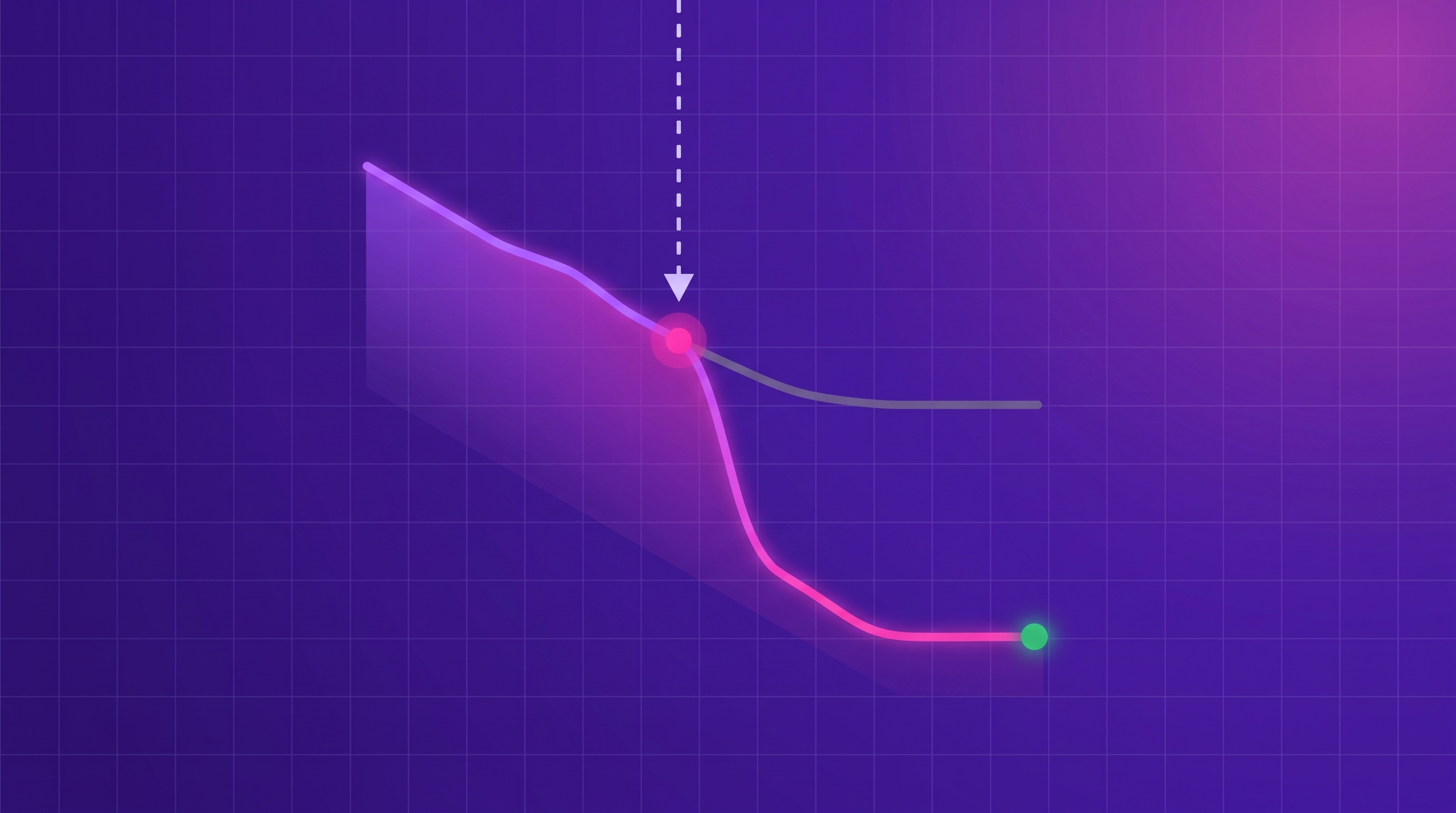
Banks should treat the share of customers scoring their experience at the bottom as a leading indicator of churn. Thematic turns that scattered feedback into a metric leaders can act on before the customer leaves. A bottom score on value, fairness, or ease is not a complaint to be closed. It is an early reading of whether the brand promise is still being kept. Read it a year out and the problem is fixable. Wait for the quarterly retention number and you are reading the obituary.
This piece argues three things. First, that customers do not experience a bank's promise; they experience its app, its fees, and its handling of a bad day. Second, that the gap between the promise and that lived experience shows up in feedback long before it shows up in the financials. Third, that reading the gap early only works if the AI doing the reading is governed, traceable, and repeatable, because no leader will stake a retention decision on a number they cannot reproduce.
What customers actually experience in banking
A brand promise is a sentence. The experience is a thousand daily decisions. Customers never read the positioning deck. They live inside the systems, the policies, and the small frictions that the promise is supposed to describe.
That gap is measurable. Working with CX expert Jeannie Walters, Thematic distilled brand promises across the airline industry into five attributes that customers actually react to, then scored public reviews against them. The same five attributes map cleanly onto banking:
- Reliability. Is my money safe, and will the payment clear? The simplest promise and the one customers forgive least.
- Ease. Can I plan, open, move, and get help without friction? This is the app and the onboarding.
- Value. Is the total relationship worth the total cost, not just the headline rate?
- Fairness. Do the fees, the disputes, and the policies feel consistent and reasonable, especially under stress?
- Empathy. Does the bank behave like it cares about the human situation during fraud, hardship, or a mistake?
The full version of this analysis, which showed how an airline's collapse was visible in its reviews more than a year early, is worth reading alongside this piece. Banking runs on the same dynamic, with higher switching costs and a slower, more expensive failure.
Why most banks read the signal too late
Most banks are not short on feedback. They are short on a way to read it as an early warning. Four habits get in the way.
They watch the average, and the average hides the warning. A bank app holding a 4.2-star average looks healthy. Inside that average, the share of reviews scoring value or fairness at the very bottom can be climbing month over month. The mean stays flat while the distribution rots. By the time the average moves, the churn is already underway.
They sort feedback by volume, not by impact. The loudest theme is rarely the most expensive one. In Thematic's analysis of public app reviews from major regional banks, one bank's most damaging issue was not its most frequent complaint. A quiet, steady drag on loyalty outranked the noisy ones once it was weighted by its effect on the score. Counting mentions tells you what is loud. It does not tell you what is costing you customers.
They treat feedback as closed tickets, not as a trend. A complaint resolved is a complaint forgotten. But the same root cause shows up across hundreds of reviews, and the pattern is the asset. In that same regional analysis, one bank saw roughly one in twenty reviewers in a single month signal they were ready to switch over one issue. That issue took months to fix. The cost of the delay was not the tickets. It was the customers who left while the clock ran.
They cannot put a number on it. "Customers are frustrated with pop-ups" does not survive a budget meeting. "One in four customers flagged intrusive pop-ups this month, and unresolved friction on this journey maps to tens of millions in revenue at risk" does. Without a dollar figure, CX loses to whatever team brought one.
A better way: read the promise as a live metric
The shift is to stop treating feedback as a record of the past and start treating it as a forecast. That means scoring every piece of feedback against the five attributes, watching the distribution and the trend rather than the average, and weighting issues by their effect on the score rather than their volume.
This is the job Thematic was built for. The Scoring Agent predicts how each reviewer would have rated the bank on each attribute, turning open-ended feedback into the survey the customer never filled out. The Theming Agent then identifies which specific issues are moving each score up or down. A bank gets a value score, a fairness score, and an ease score that update as feedback arrives, each one traceable to the exact customer phrases behind it.
Atom Bank, the UK digital challenger, shows what acting on that reading looks like. Atom has used Thematic for more than three years to read feedback across seven channels and three product lines, from app store reviews and Trustpilot to complaints, call summaries, and its CEM platform. The team built a single Customer Goodwill Score from one to one hundred that unifies all of it. Acting on what that score surfaced, Atom cut calls about unaccepted mortgage requests by 69 percent and device-issue calls by 40 percent, reduced contact-center failure demand by 30 percent, and grew its customer base by 110 percent. It holds a 4.6 out of 5 rating on Trustpilot, among the highest-rated banks on the platform. As Michael Sherwood, Atom's Head of Digital Experience, describes it, Thematic turns unstructured feedback from across channels into clear insights that directly inform the product roadmap and corporate strategy.
The pattern generalizes. Forrester has shown that customer experience leaders outperform laggards on revenue growth in markets where customers can switch and experience is differentiated, which describes retail banking precisely. McKinsey found that CX leaders grew revenue more than twice as fast as laggards over a recent five-year stretch. The bottom-score signal is the leading edge of that gap.
Why this only works with governed AI
Here is the catch that this whole shift depends on. AI can read these signals. Ungoverned, it makes them worse.
Ask a general-purpose model to analyze a quarter of feedback and it will invent numbers that look plausible. Run the same prompt twice and it will give you two different answers. And it will hand you a conclusion with no way to trace which customer comments produced it. None of that survives a retention decision worth tens of millions, and in a regulated industry none of it survives an audit.
The unlock is not more AI. It is AI that is governed, traceable, and repeatable. A value score you can stake a budget on has to mean the same thing this quarter as last, has to return the same answer when you run it again, and has to let a human click from the number down to the comments behind it. Thematic is built around that requirement: scores tie to the themes driving them, themes tie to the verbatim customer language, and a domain expert stays in the loop to keep the model aligned to how the business actually thinks. A signal you cannot trust is a signal no one will act on, and a signal no one acts on is worth nothing no matter how early it arrived.
What to do Monday
Here is a five-step test you can run this week.
- Pick one product line and one attribute.
- Pull every piece of feedback you already have on it, from app reviews to call notes.
- Score the share of customers landing at the very bottom, and watch the trend across the last twelve months, not the average.
- Find the issue dragging that score the most, even if it is not the loudest.
- Put a revenue figure on the customers it is putting at risk.
A bank that does this is reading its promise as a live metric instead of a quarterly post-mortem. The promise breaks in the feedback first. The banks that win read it early, while it is still fixable, and trust the number enough to act.