How Enterprise Companies Integrate and Manage Customer Feedback Across Multiple Channels
Your NPS is shifting and feedback is piling up, but answering "what's driving these changes?" means pulling data from five different systems. This guide explores how leading enterprises integrate multi-channel feedback into unified platforms.
Build, Buy or Partner? A Layered Guide to AI Feedback Analytics
Guide for businesses in deciding how to implement AI for customer feedback analysis, moving beyond a simple "build or buy" choice to a layered approach
Enterprise feedback integration isn't a data problem. It's a systems problem that prevents feedback from becoming intelligence.
Organizations that centralize feedback analysis into unified AI-powered platforms can reduce analysis time by up to 91% and identify cross-channel patterns invisible in siloed systems.
Integrated platforms connect CX insights directly to business outcomes like revenue attribution and NPS improvement.
Your Net Promoter Score (NPS) is shifting, feedback is piling up, and executives want answers.
But when they ask "what's driving these changes?" you're stuck pulling data from five different systems, reconciling conflicting reports from different teams, and spending weeks on analysis that's outdated by the time it reaches the boardroom.
This is the enterprise multi-channel feedback integration challenge.
It's not a data problem. You have plenty of feedback. It's a systems and integration problem that prevents feedback from becoming intelligence.
Enterprise companies that successfully manage customer feedback across multiple channels share three characteristics:
They centralize feedback analysis into unified platforms rather than fragmenting it across teams
They implement integration approaches that maintain data quality while enabling broad access
They choose AI-powered feedback analytics platforms that scale without requiring proportional increases in analyst headcount
This guide takes a look at how leading organizations have structured their multi-channel feedback integration, the implementation patterns that work at scale, and the change management considerations that determine success.
What is enterprise multi-channel feedback integration?
Enterprise multi-channel feedback integration is the process of connecting customer feedback from multiple sources: surveys, support tickets, app reviews, social media, and other channels into a unified analytics platform for centralized analysis.
💡 Unlike basic data aggregation, true multi-channel integration enables cross-channel pattern recognition: discovering themes that appear across touchpoints but would be invisible when analyzing each source independently.
Integration breadth: Native connectors for surveys, support systems, review platforms, and data warehouses.
Data unification: Automatic standardization of different formats while preserving source-specific metadata.
Unified analysis: A single analytical framework that works across all sources, enabling cross-channel comparison.
💡Pro tip: AI-powered feedback analytics platforms like Thematic provide these capabilities through self-service setup, enabling enterprise teams to connect multiple feedback sources and generate insights within days rather than months.
Why enterprise multi-channel feedback integration is different
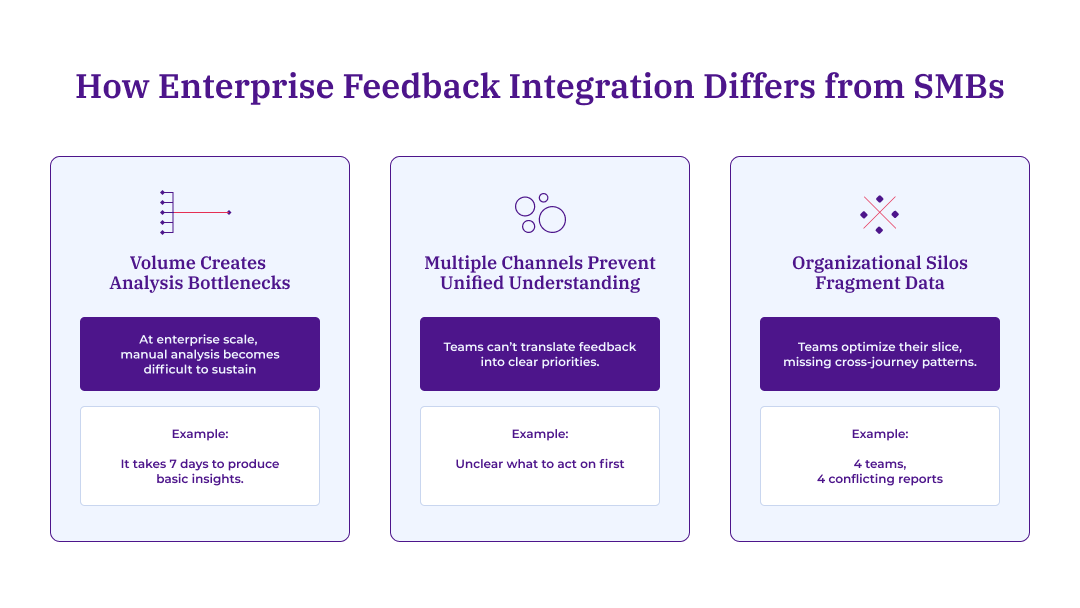
Enterprise feedback integration differs from SMB approaches in three fundamental ways:
Enterprise feedback integration faces three challenges SMBs don't: volume bottlenecks, channel fragmentation, and organizational silos.
Volume creates analysis bottlenecks
Orion Air Airways, a leading low-cost carrier in the Asia-Pacific region, found that NPS scores were shifting and feedback was piling up, but it wasn't clear what needed to change or where to focus first.
At enterprise scale, manual analysis becomes difficult to sustain, and even semi-automated approaches can create bottlenecks that delay insights by weeks.
A large grocery retailer found their existing approach wasn't delivering actionable intelligence. Despite having substantial feedback volume across surveys, support tickets, and store-level feedback, they couldn't translate it into clear priorities.
Analysis took seven days to produce basic insights, and teams struggled to understand what customers actually needed and what to act on first.
Organizational silos fragment feedback data
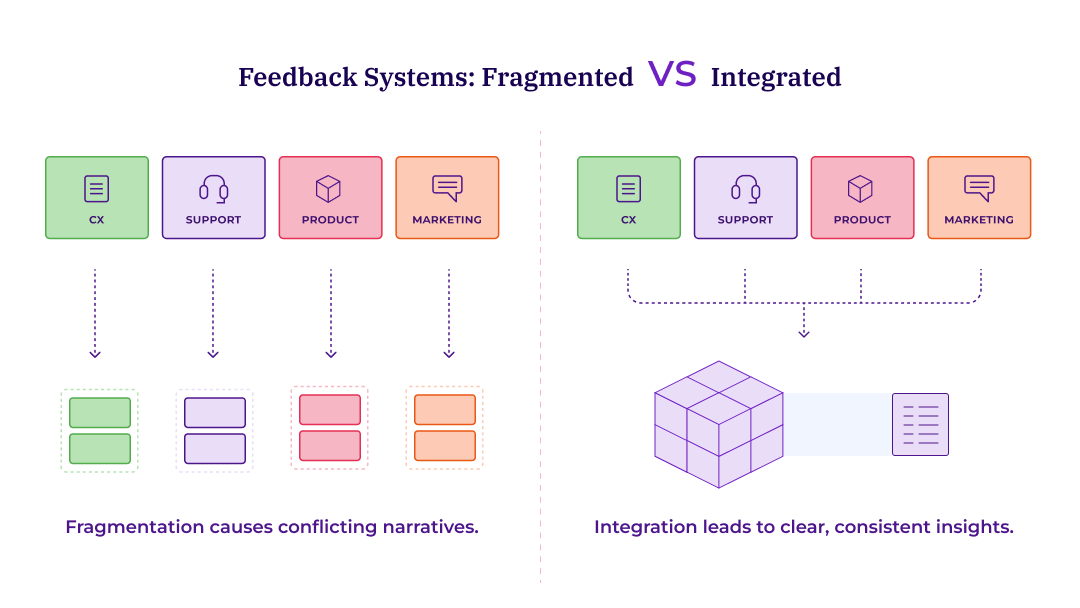
Enterprise feedback touches multiple teams and systems:
Customer experience (CX) owns surveys
Support owns tickets
Product owns feature requests
Marketing monitors social channels
At Orion Air, teams worked in silos, CX investments lacked focus, and leaders couldn't measure the impact of their efforts. Without integrated systems, each team optimizes for their slice while missing patterns that affect the entire customer journey.
Siloed teams create conflicting narratives; integrated systems reveal the full picture.
How fragmented feedback systems evolve
Many enterprise organizations evolve into fragmented feedback systems organically.
Different teams adopt different tools. Acquisitions bring additional platforms. What starts as pragmatic tool selection can eventually limit visibility across the customer journey.
Signs you've outgrown fragmented feedback systems
You may recognize these patterns when your organization is ready for unified multi-channel integration:
Teams report conflicting findings because they're analyzing different slices of customer feedback
Executives receive inconsistent narratives about customer experience
Issues that span multiple touchpoints go undetected because no single team sees the complete picture
Analysis takes days or weeks, missing time-sensitive opportunities
The large grocery retailer experienced this directly. Their previous approach required seven days to produce basic insights and missed revenue opportunities daily. They had feedback but couldn't transform it into clear action.
The case for multi-channel feedback consolidation
Consolidating feedback analysis through integrated platforms delivers three key advantages:
Faster response to emerging issues through unified visibility across all channels
Reduced duplicated effort across teams analyzing the same customers in different systems
Clearer business impact that helps CX investments compete for resources
Orion Air's Head of Insights, Donovan, confirmed that organizations across industries struggle to "effectively quantify and prioritize CX initiatives."
The opportunity isn't just collecting more feedback. It's integrating feedback sources into a unified platform that transforms data into prioritized action.
Two enterprise patterns for multi-channel feedback integration
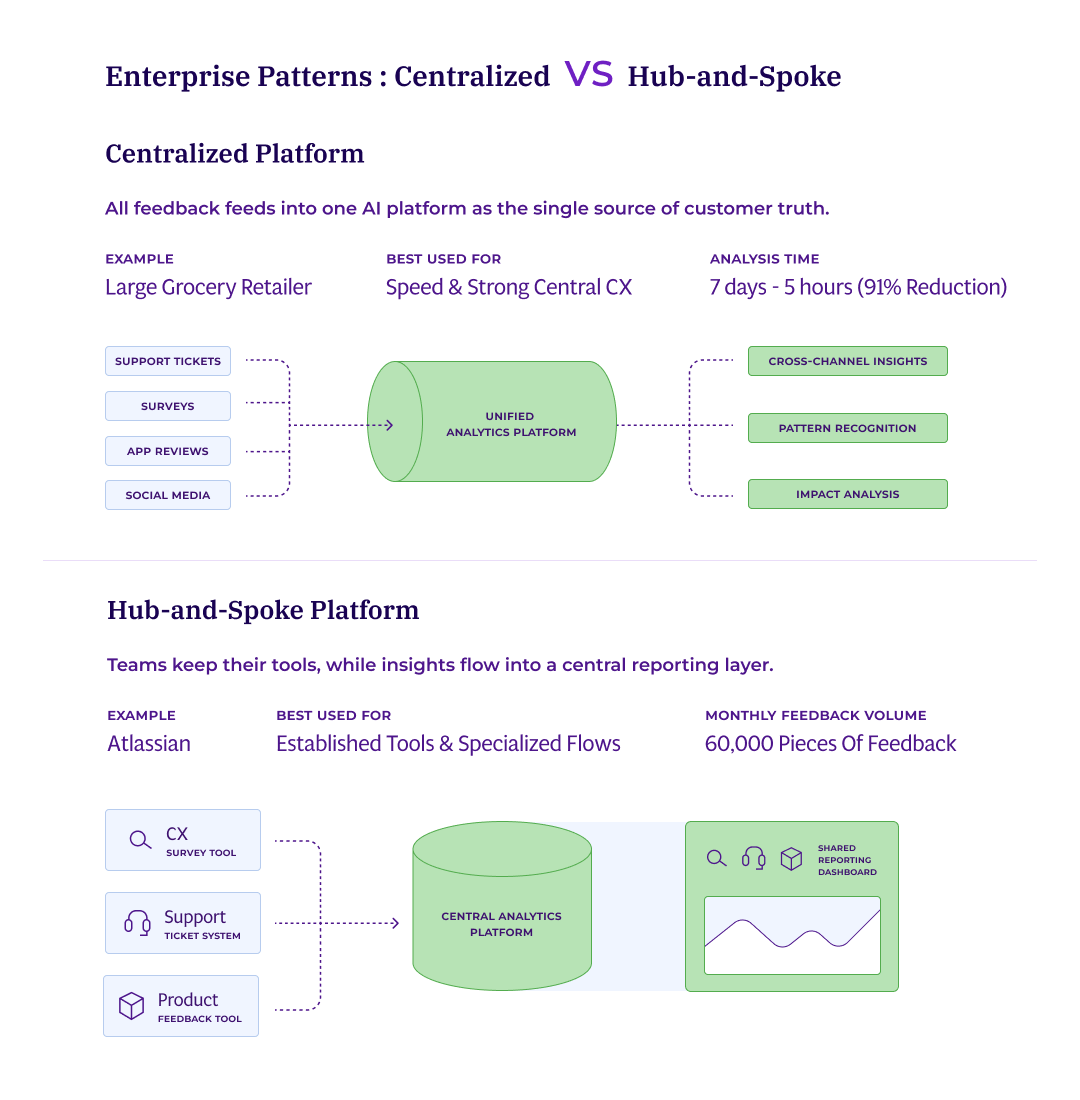
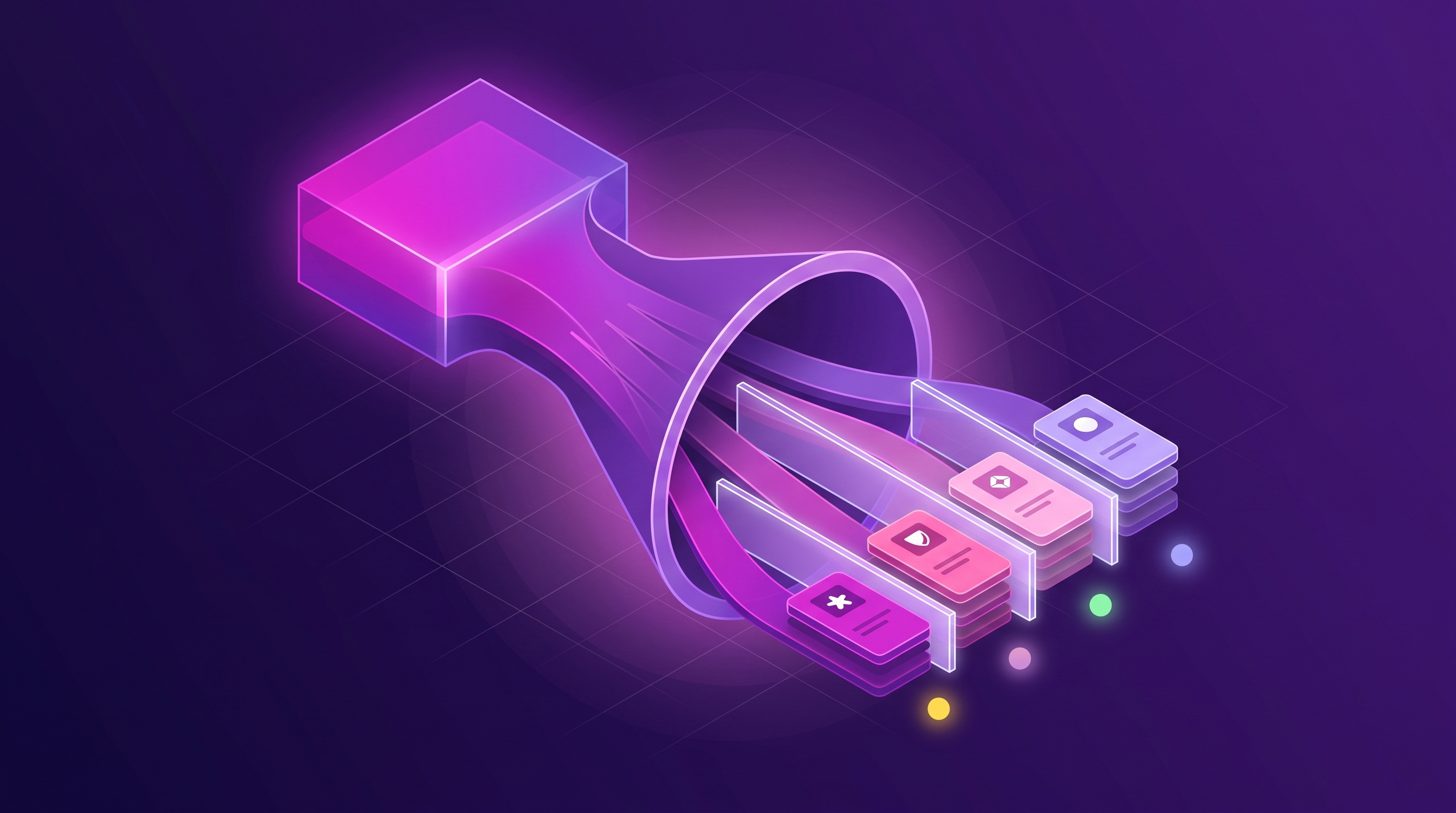
Enterprise organizations typically adopt one of two patterns for integrating multi-channel feedback: centralized platforms or hub-and-spoke systems with unified reporting.
Two proven patterns for unifying enterprise feedback: full centralization or hub-and-spoke with shared reporting.
Centralized platform approach
In this model, all feedback flows into a single AI-powered feedback analytics platform that serves as the organization's source of truth for customer intelligence.
How it works: Native integrations pull feedback from surveys, support systems, review platforms, and other sources into one platform. AI-powered analysis discovers themes across all channels simultaneously, enabling cross-channel pattern recognition that siloed analysis misses.
Best for: Organizations prioritizing speed to insight, companies with strong central CX or insights functions, and teams that need to correlate feedback across touchpoints.
Example: The large grocery retailer consolidated their fragmented feedback sources into Thematic, a customer feedback analytics platform with enterprise multi-channel integration capabilities, replacing their previous approach.
The transformation was dramatic: analysis time dropped from 7 days to 5 hours (a 91% reduction), and the unified view enabled them to generate $4.8 million in annual revenue from customer-driven initiatives.
Hub-and-spoke systems with unified reporting
In this model, individual teams maintain their specialized tools for collection, but analyzed insights flow into a central reporting layer through platform integrations.
How it works: Teams continue using domain-specific tools for collection and initial triage. A central feedback analytics platform ingests either raw feedback or pre-processed data from these systems via native connectors, APIs, or data warehouse connections. The platform applies unified AI-powered analysis and makes insights available through shared dashboards.
Best for: Organizations with established tool investments, companies where teams require specialized workflows, and enterprises where practical considerations make full centralization difficult.
Example: Atlassian receives an estimated 60,000 pieces of customer feedback every month from multiple sources. They use Thematic's customer feedback analytics capabilities to analyze and sort this feedback, then transfer the analyzed data into their reporting dashboard for cross-functional access. This approach lets product teams access insights relevant to them within existing workflows.
Connecting integrated feedback to business operations
Integrating feedback sources is only half the job. The real value comes from customer experience analytics that connect unified insights to operational metrics teams can act on.
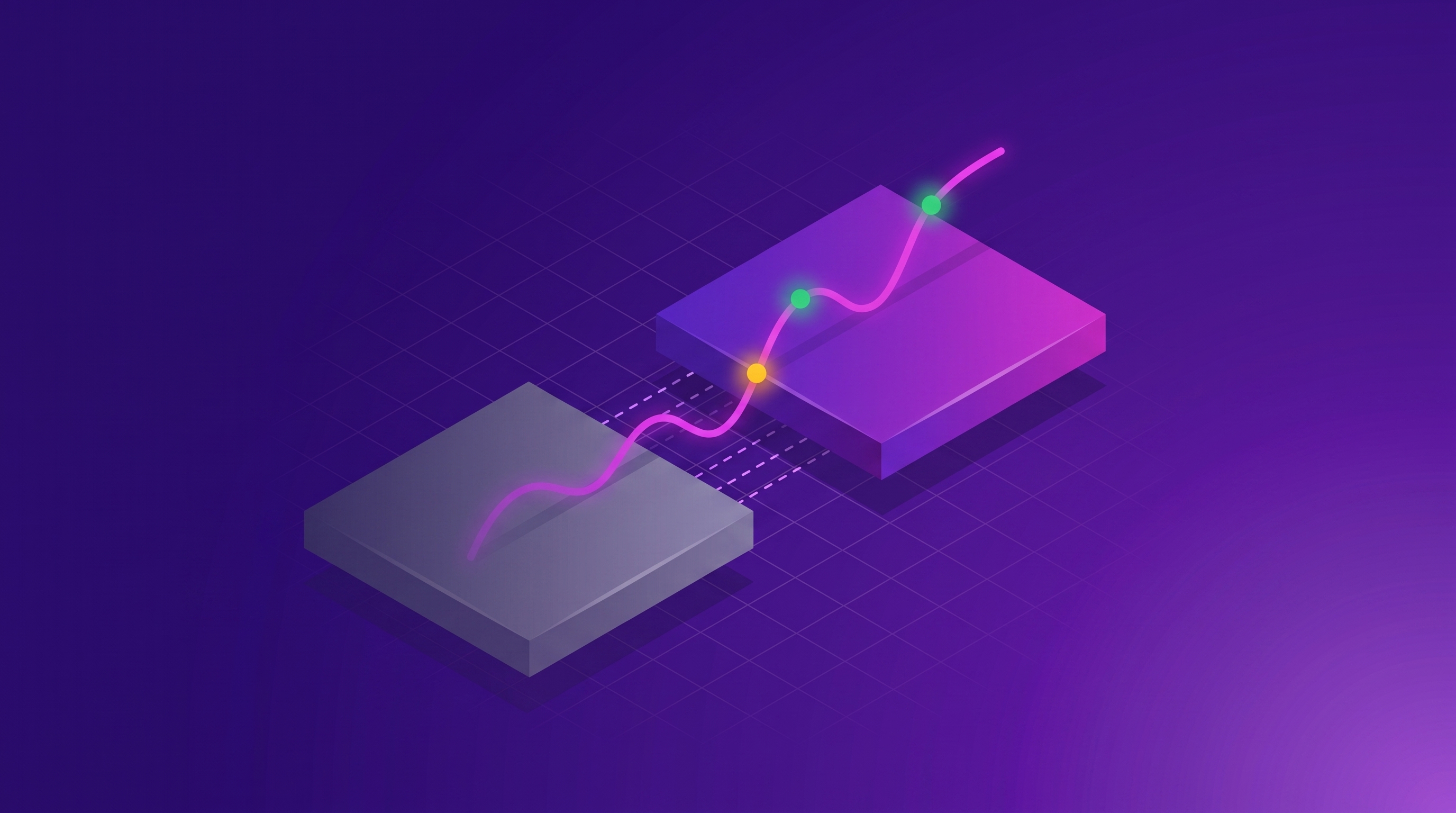
Orion Air built a model showing how improving specific customer touchpoints would deliver dividends on NPS, revenue, and retention. This required linking customer comments, NPS scores, and contextual data from multiple channels into coherent themes that identified reasons for score shifts.
The baggage handling example
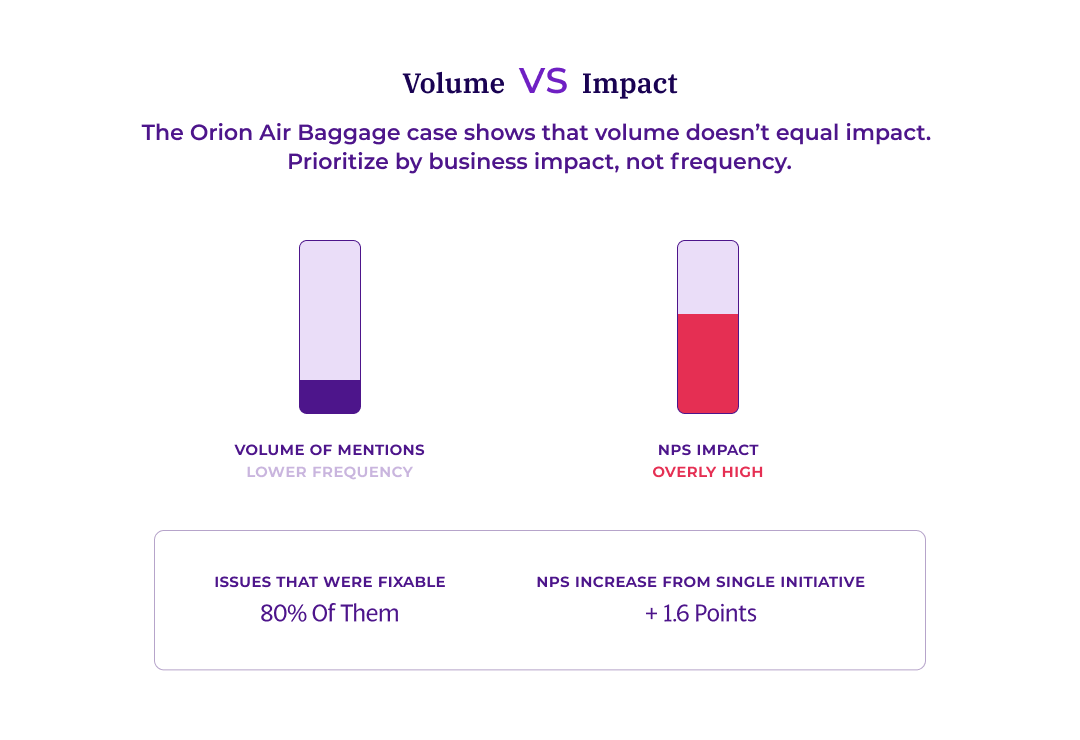
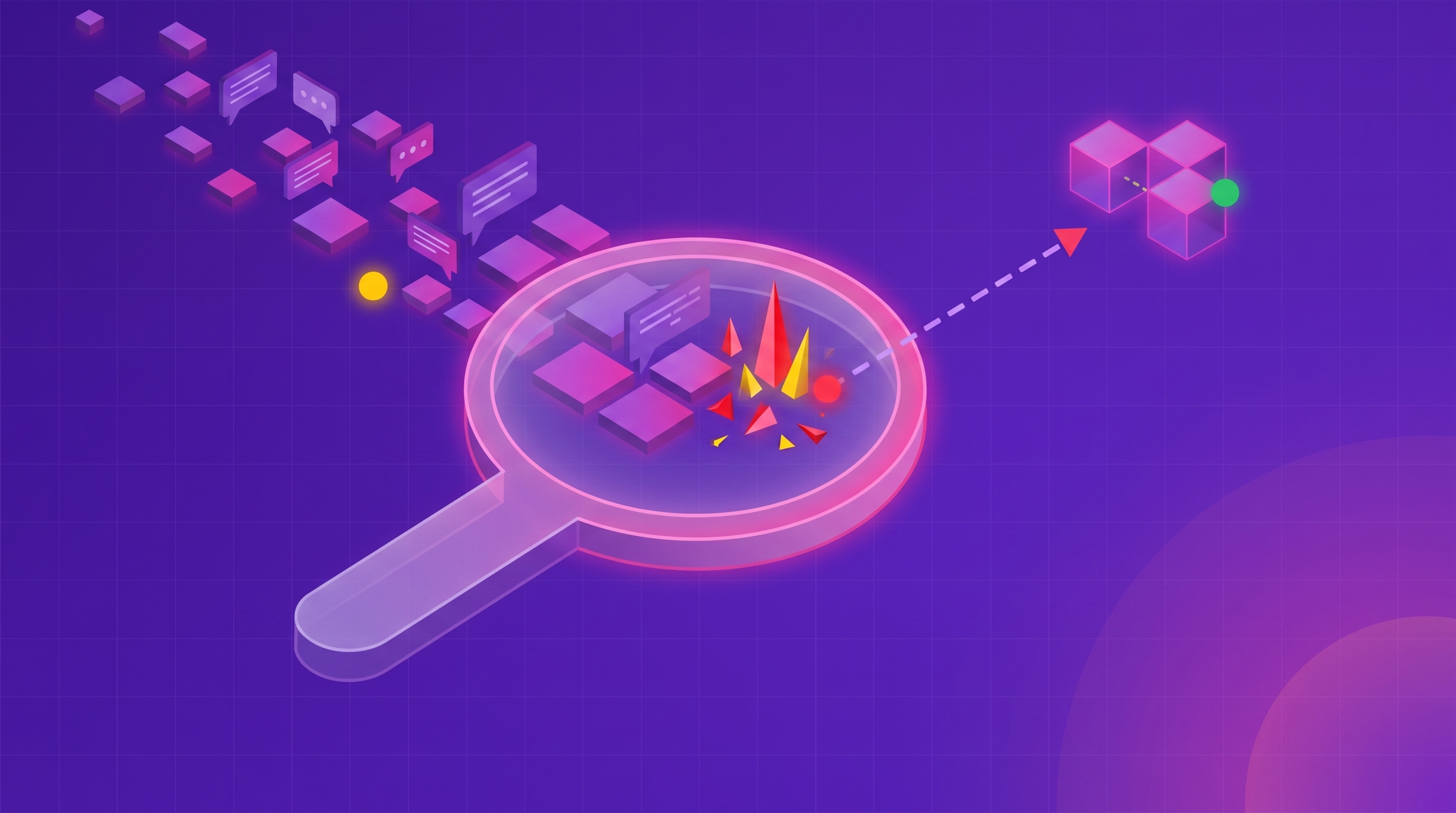
Thematic's cross-channel analysis revealed that while baggage issues weren't the most frequently mentioned in customer feedback, they had a disproportionate impact on NPS and customer lifetime value. More importantly, 80% of the issues were operationally fixable.
With this clarity from integrated feedback analysis, Orion Air made precise changes to improve the baggage experience and saw a 1.6-point NPS increase from that single initiative, contributing to their overall 13% NPS improvement.
The loudest feedback isn't always the most important. Prioritize by business impact, not frequency.
Why impact matters more than volume
The key insight: Volume of mentions doesn't equal business impact.
Enterprise programs with integrated multi-channel feedback need analysis that quantifies which themes disproportionately affect metrics, enabling teams to prioritize by impact rather than frequency.
The large grocery retailer applied similar logic, using Thematic's impact analysis to identify which departments had the highest impact on overall NPS scores. This specificity enabled targeted improvements rather than generic "improve customer experience" initiatives, ultimately contributing to 4.75% business growth.
Avoiding common multi-channel feedback implementation failures in feedback analytics platforms
Enterprise multi-channel feedback integration programs can fail for predictable reasons. Here's how to avoid the most common pitfalls.
Overbuilding integrations before proving value
Organizations that attempt to integrate every feedback source before demonstrating ROI often lose executive sponsorship during extended implementation periods.
Instead, start with two to three high-impact sources and expand incrementally. The large grocery retailer started with a focused pilot that delivered measurable results: 91% reduction in analysis time and identification of $4.8 million in revenue opportunities.
These concrete outcomes built the credibility needed to expand integrations across the organization, ultimately saving 24 weeks of analyst time annually.
Choosing platforms that can't scale with your integration needs
As feedback programs mature, organizations face scaling challenges. New products, expanded markets, and additional collection channels all contribute to growing integration complexity.
LendingTree processes over 20,000 comments every 90 days across 7 product verticals and 10 continuous data sources. Their platform handles this volume automatically, with self-learning AI building themes directly from each dataset without manual coding or model training.
As enterprise programs mature, many incorporate new feedback channels from product launches, market expansion, or acquisitions.
When this happens, the integration approach matters: platforms requiring weeks of configuration for each new source can create ongoing implementation burden, while those with extensive native connectors and flexible import options scale more efficiently.
For sources without native connectors, automated file imports and data warehouse connections provide fallback options that don't require engineering resources for each addition.
Losing metadata consistency across integrated sources
As programs expand geographically or through acquisition, maintaining consistent data structures becomes critical for cross-channel analysis.
The large grocery retailer needed to compare performance across stores, departments, and seasons with statistical validation. This requires platforms that preserve context from each source while enabling comparison across the organization.
Atom Bank demonstrates this at scale: they consolidated feedback from seven engagement channels across three product lines into unified analysis, enabling cross-channel pattern recognition that contributed to 69% reduction in calls related to unaccepted mortgage requests and 110% year-over-year customer growth.
Building stakeholder confidence in integrated feedback insights
Technology selection matters less than organizational adoption. The most sophisticated multi-channel integration delivers no value if teams don't use it or trust its outputs.
The critical requirement: Traceability
Enterprise stakeholders, especially executives, challenge insights before acting on them. Platforms that can't explain their methodology undermine credibility.
When an executive asks "how do you know this?" the analyst must be able to show specific customer comments supporting the conclusion.
AI-powered feedback analytics platforms like Thematic provide complete validation workflows, tracing every insight to specific customer comments so teams can explain and defend conclusions with full evidence trails.
Successful enterprise implementations prioritize quick wins that build organizational momentum.
Orion Air focused on connecting CX metrics to commercial outcomes. Donovan summarized the philosophy:
"What's remarkable isn't just that we improved NPS. It's that we became more efficient in the process. Thematic helped us invest smarter, not just more."
The results speak for themselves: a 13% increase in NPS driven by fewer flight delays, lower cancellation rates, and improved baggage handling reliability.
Getting started with enterprise multi-channel feedback integration
Organizations ready to integrate their feedback sources can follow this sequence:
Audit current feedback sources. Document all feedback sources, current analysis approaches, and gaps in coverage or capability. Identify where siloed systems create blind spots. (See Article 1 for a detailed inventory process.)
Define integration success criteria. Establish specific metrics for analysis speed, insight quality, and business impact before selecting platforms. Orion Air focused on connecting CX to commercial outcomes; the large grocery retailer prioritized analysis speed and revenue attribution.
Start with high-impact integrations. Choose two to three high-impact feedback sources for initial implementation rather than attempting comprehensive integration immediately.
Prove value quickly. Target early wins that demonstrate ROI within 90 days, building credibility for program expansion.
Expand integrations systematically. Add new feedback channels based on business priority. Use these evaluation criteria to assess integration requirements.
Why Thematic for enterprise multi-channel customer feedback integration
Thematic is a customer feedback analytics platform purpose-built for enterprise multi-channel integration. The platform combines broad integration coverage with AI-powered analysis that discovers themes automatically from your data. No manual coding, no model training, and no consultants needed.
Key capabilities for enterprise feedback integration:
Self-service setup: Connect feedback sources and generate insights within days, not months
Dozens of native connectors: Pre-built connectors for major survey, support, and review platforms
Unified cross-channel analysis: Single analytical framework that reveals patterns across all sources
Impact quantification: See exactly which themes affect NPS, CSAT, and other metrics
Complete traceability: Defend every insight with specific customer comments
Organizations can start with a focused pilot and expand as they prove value, without the extended implementation timelines typical of enterprise CX platforms.
Ready to see enterprise multi-channel feedback integration in action?
Thematic connects to your existing feedback sources and unifies them for AI-powered customer feedback analytics. Learn the science behind it and request a demo to see how it works with your data.
Share
Link Copied!
Request a demo of Thematic's Customer Intelligence Platform
Thematic turns fragmented feedback into one consistent source of customer truth — so every team acts on the same customer story. Up and running in days, not quarters.
Thank you! Your submission has been received!
Oops! Something went wrong while submitting the form.