Enterprise teams now have AI agents that can read customer feedback, cluster it into themes, score it, and route the results to the right people. So the real question a CX, insights, or product leader is asking in 2026 is not whether agents can do the work. It is whether you can let them do it unsupervised.
The short answer: AI agents can analyze the large majority of customer feedback on their own, but you still need a human in the loop for the judgment calls, and the best programs design for that on purpose. Thematic runs specialized CX Agents that discover themes, score outcomes, and route actions continuously, while keeping every conclusion traceable back to the raw comments so a person can inspect, correct, and defend it. The goal is not to remove the human. It is to move the human from doing the manual work to steering and approving it.
Below is what "on their own" actually means, where full autonomy breaks down, and how to decide which parts of feedback analysis are safe to automate and which need a checkpoint.
What "an AI agent analyzing feedback on its own" actually means
An AI agent is software that perceives its environment, decides based on data and a goal, and acts on your behalf, often by chaining several steps together. Agentic AI extends that to multi-step work with minimal supervision.
Applied to customer feedback, an agent can run the parts of the job that used to eat an analyst's week:
- Discover themes from raw comments without a pre-built taxonomy (bottom-up discovery).
- Adapt those themes as customers change how they talk, without a quarterly rebuild.
- Score unstructured feedback into outcome metrics like predicted NPS, CSAT, churn, and effort.
- Route the most important findings to the team that can act on them.
The word "on their own" is where the ambiguity lives. An agent generating a theme structure is not the same as an agent deciding, unsupervised, that a theme is correct, that it means what it appears to mean, and that the business should act on it. The first is automation. The second is judgment.
What analyzing customer feedback reliably actually requires
Feedback analysis is not just classification. To be trusted by a skeptical executive, the output has to clear a higher bar than "the model produced an answer."
Accuracy that holds under scrutiny. A theme has to reflect what customers actually said, not a plausible-sounding summary. AI theme discovery in Thematic starts above 80% accuracy out of the box and improves with human refinement.
Traceability. Every theme and score should trace back to the specific comments behind it. Thematic provides theme-level traceability and comment-level verification so a conclusion can be checked, not just believed.
Business context. A model does not know that a spike in "wait time" complaints coincided with a system migration, or that a recommendation no longer fits this quarter's strategy. That context lives with people.
Defensibility. Enterprise decisions get challenged. Under the EU AI Act's Article 14, higher-risk AI has to be designed so people can oversee it, understand its limits, detect anomalies, and intervene. The NIST AI Risk Management Framework says the same in practice: define review points, override rights, and decisions that need human approval before action.
Where fully autonomous feedback analysis falls short
Letting agents run end to end with no human checkpoint fails in specific, well-documented ways.
- Hallucination. The Stanford HAI 2026 AI Index found hallucination rates ranging from 22% to 94% across 26 leading models on an adversarial benchmark. Its conclusion was blunt: human oversight is not optional.
- Confident wrong answers at scale. An agent does not flag its own uncertainty the way an analyst does. The same AI Index logged 362 AI incidents in 2025, up from 233 the year before.
- Quality drops the models do not catch. In a randomized field experiment published in 2026, an agentic AI handling customer chats cut handling time but lowered customer ratings, and human intervention only partly rescued quality. Once a customer was already frustrated, the human could not fully recover the interaction.
- Trust the vendors have not earned yet. Gartner found only 19% of organizations had high or complete trust in their AI vendor's ability to protect against hallucinations, and predicts more than 40% of agentic AI projects will be canceled by the end of 2027 on cost, unclear value, and inadequate risk controls.
The pattern is consistent. Autonomy is cheap to turn on and expensive to trust. The teams getting value are not the ones removing the human. McKinsey's 2025 State of AI research found that high performers were far more likely to have defined human-in-the-loop validation than everyone else, 65% versus 23%.
How Thematic keeps a human in the loop without slowing the agents down
The trap is treating this as a trade-off, where more oversight means less speed. Thematic's design turns oversight into the thing that makes autonomy safe.
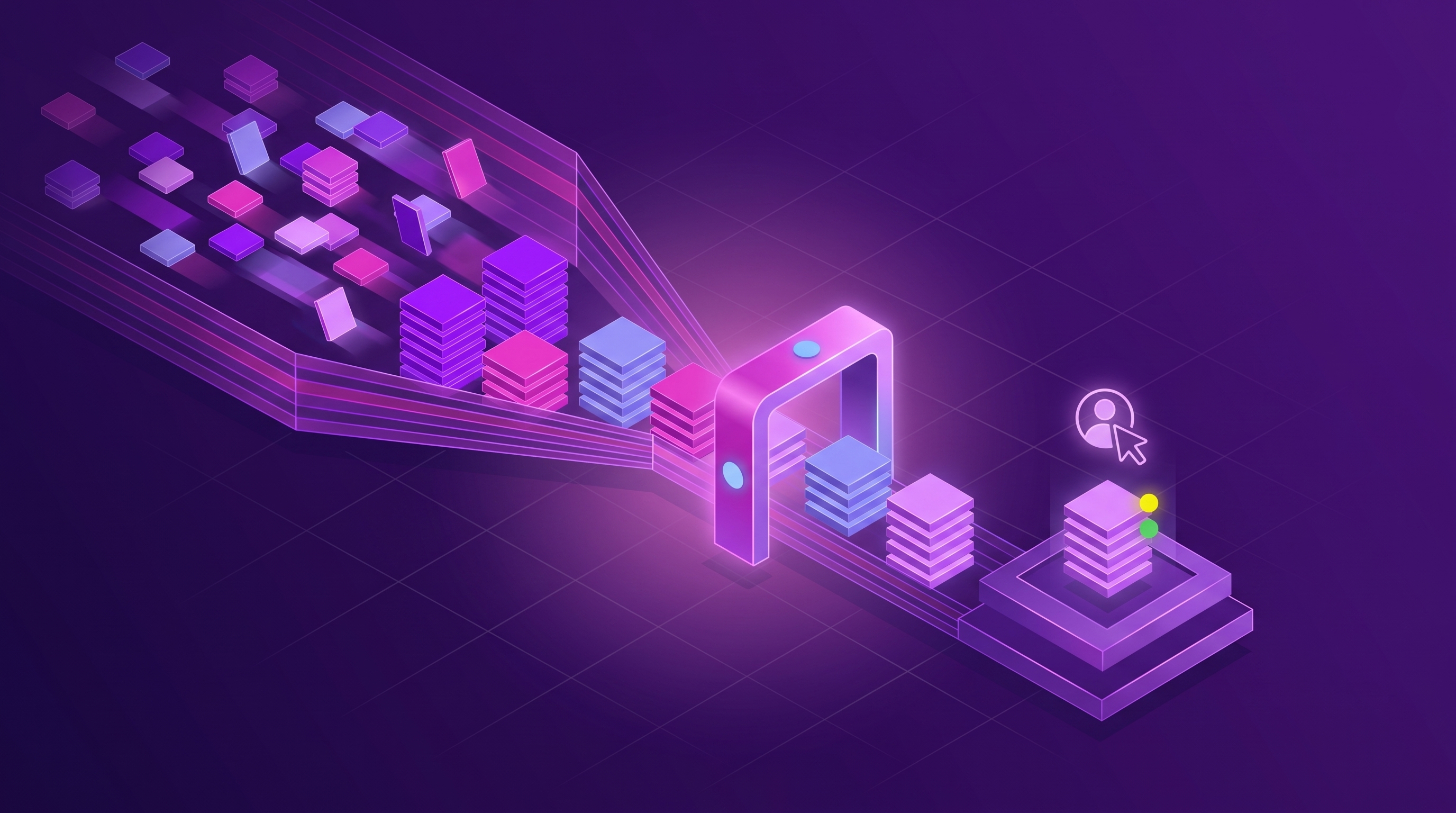
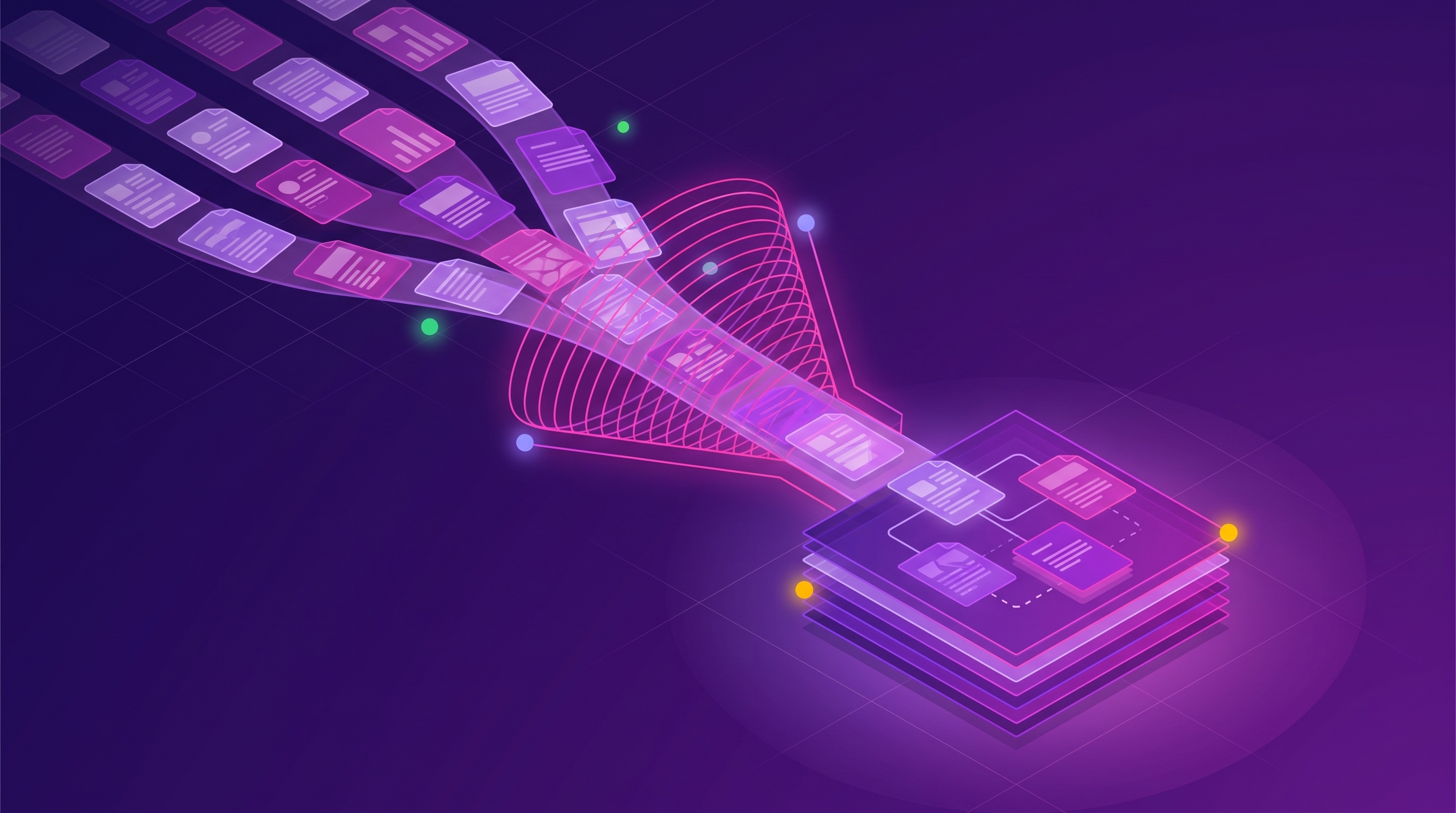
The agents carry the volume. The Theming Agent discovers and maintains themes continuously, with no quarterly rebuild and no analyst babysitting the taxonomy. The Scoring Agent turns unstructured feedback into predicted outcome metrics. The Actions Agent routes prioritized findings to the right team. This is the work that does not need a human, and letting agents own it is where the time savings come from.
The human steers, does not process. Because every theme is auditable and editable in the Themes Editor, a person can correct a mislabeled theme in a few clicks rather than re-coding thousands of comments. Expertise shapes the AI, and the AI scales that expertise back across the whole dataset.
Traceability makes the output defensible. Thematic ties every theme and score to the underlying comments, so an insights lead can show a CFO exactly which verbatims drive a number. That is what lets a team stake a decision on the analysis.
Governed context keeps teams aligned. Lenses give each team a governed view of the same underlying customer truth, so product, CX, and support are not working from three different versions of the story.
What this looks like in practice
Community Health System, a not-for-profit healthcare network in California's San Joaquin Valley, runs an annual employee engagement survey with open-ended feedback from staff across 250 departments. Using Thematic, the Organizational Development team produced a standardized insight report for every one of those 250 departments in a three-day sprint. Analysis time dropped by 67%, saving more than 160 hours per cycle, and report access went from VP-only to 100% of directors. Their own description of why it worked is the answer to this article's question: "Thematic handled the heavy lifting: clustering comments into themes, generating summaries, and proposing department-specific next steps. The Organizational Development team handled judgment calls." The AI created the speed and structure. The people applied the context.
DoorDash's research team shows the same split at a different scale. A team that started with seven people uses Thematic to synthesize tens of thousands of open-ended NPS responses from consumers, Dashers, and merchants, and has completed or facilitated nearly a thousand bespoke research projects over two years. As Head of Research Zach Schendel put it, raw feedback is useless "unless it's tamed in some kind of way." The agent tames the volume. The researchers do the thinking.
The same division of labor drives hard operational numbers. Atom Bank, the UK digital bank, analyzed product feedback across seven channels and three product lines and cut calls about unaccepted mortgage requests by 69%. The AI found the pattern. People decided what to fix.
A buyer's checklist for agent-led feedback analysis
Ask any vendor pitching autonomous feedback agents these questions:
- Can I trace every theme and score back to the exact comments behind it?
- Can a non-technical analyst correct a theme without re-coding the dataset?
- What happens to my themes when customers change their language, or when the underlying model is upgraded?
- Where are the human checkpoints, and which actions require human approval before they fire?
- Can I show a skeptical executive why a number is what it is, on demand?
- Does each team get a governed view, or is everyone reinterpreting the same raw output?
If the answers are vague, you are being sold autonomy without accountability.
The short answer
AI agents can analyze customer feedback on their own for the heavy lifting: theme discovery, scoring, and routing at a scale no human team can match. You still need a human in the loop for judgment, context, and defensibility, and the strongest enterprise programs design that oversight in rather than bolting it on. Thematic's approach keeps the agents fast and the humans in control by making every conclusion traceable and editable. The test to run: ask whether you could defend any single number your feedback tool produces, all the way down to the customer's own words. If you can, you have the balance right.