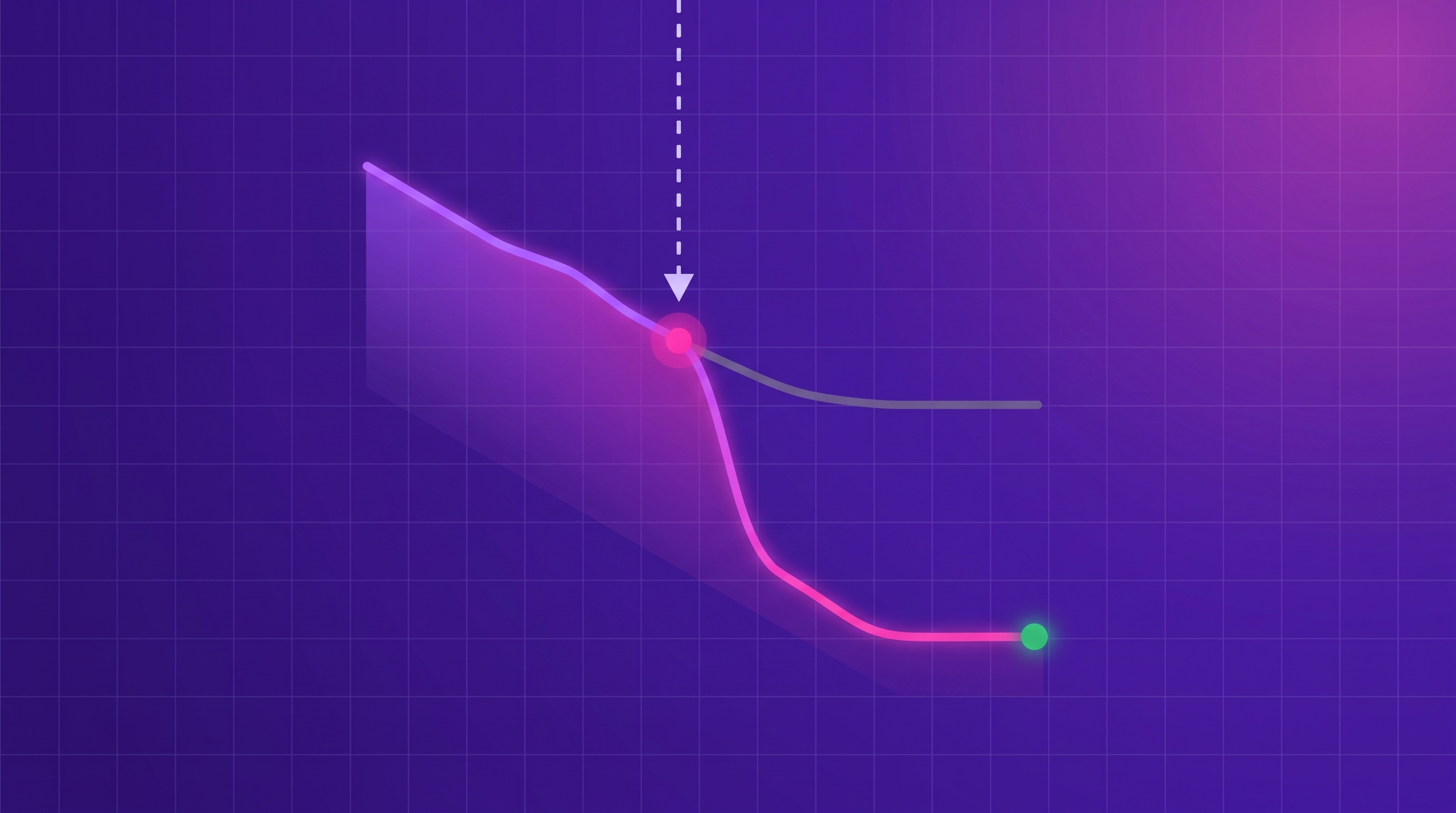
Every inbound call has a reason, and most of those reasons are written down somewhere: in the call summary, the follow-up survey, the support ticket that came before the call, the one-star review that came after. Contact center teams under pressure to cut volume usually reach for deflection tactics first, more IVR options or a bigger help center. The faster path is to read the feedback you already have, find the handful of issues driving the most calls, and fix them at the source so the calls never happen.
You reduce contact center call volume with customer feedback analysis by finding the top reasons customers contact you, separating the avoidable contacts from the necessary ones, and fixing the upstream cause of the avoidable ones. Thematic does this by unifying calls, tickets, chats, and surveys into one intelligence layer, quantifying the themes driving contact volume, and tying each one back to the raw comments so a team knows exactly what to fix first. The economics are hard to ignore: Gartner puts the cost of a live contact around $8.01, against roughly $0.10 for self-service.
Below is a five-step process, a worked example, and the mistakes that keep teams stuck.
The five-step process
- Capture the reason behind every contact. Unify call summaries, tickets, chats, and post-contact surveys in one place.
- Quantify the top contact drivers. Rank the recurring themes by volume, sentiment, and cost, not ticket by ticket.
- Separate failure demand from value demand. Tell the avoidable contacts apart from the necessary ones.
- Fix the top drivers at the source. Change the product, process, or proactive communication that causes the contact.
- Deflect what remains and track repeat contacts. Route the rest to self-service that actually resolves, and watch the repeat contact rate.
Step 1: Capture the reason behind every contact
You cannot reduce what you cannot see. The first step is to bring every signal about why customers are contacting you into one place: call and chat transcripts, support tickets, post-contact survey verbatims, app reviews, and complaints.
The common mistake here is analyzing one channel in isolation, usually survey responses, while the blunter language lives in tickets and calls. Thematic unifies these sources into a single intelligence layer so the reason for contact is read across the whole journey, not one survey at a time. Atom Bank unified feedback from seven channels across three product lines, including App Store reviews, Trustpilot, support complaints, and call summaries.
Step 2: Quantify the top contact drivers
Once the feedback is unified, the goal is to find the small number of themes generating the largest share of contacts. This is where teams that tag tickets by hand fall down: a fixed category list drifts, and manual tagging cannot keep pace with volume.
Thematic discovers themes from the feedback itself and ranks them by volume, sentiment, and impact, so a team sees which issues are driving the most contact and how customers feel about each. Pair each theme with a cost figure and the priority becomes obvious. At around $8.01 per live contact, a theme responsible for 10,000 avoidable calls a year is an $80,000 problem, and it is now visible next to the exact comments behind it.
Step 3: Separate failure demand from value demand
Not every call is a problem to be removed. The useful distinction, coined by systems thinker John Seddon, is between value demand and failure demand. Value demand is a customer contacting you for something you want them to contact you about. Failure demand is demand caused by a failure to do something, or to do something right, for the customer.
Failure demand is the volume you can actually eliminate. A customer calling because a status email never arrived, an instruction was unclear, or a fee was a surprise is a call you created upstream. Thematic makes this separation practical by surfacing the themes tied to broken processes and unclear communication, so a team can quantify how much of its volume is avoidable rather than guess.
Step 4: Fix the top drivers at the source
This is the step that removes calls. For each top failure-demand driver, trace it to its root cause and fix it upstream rather than handling each contact one at a time.
Common fixes the feedback will point to:
- Rewrite a confusing instruction, policy, or error message that generates repeat questions.
- Add or repair a proactive notification so customers stop calling to ask for a status.
- Fix the product or process defect behind a recurring complaint.
- Build or correct the self-service content for an issue customers currently have to call about.
Because every Thematic theme links back to the raw comments, the team fixing the issue can read the actual customer language behind it, which makes the root cause concrete instead of a category label.
Step 5: Deflect what remains and track repeat contacts
After the upstream fixes, route the remaining avoidable contacts to self-service. One caution: deflection only works when the self-service option actually resolves the issue. Gartner found that only 9% of customers report fully resolving their issue through self-service, so deflection that just hides the phone number backfires into repeat contacts and higher effort.
Track the repeat contact rate as your control metric. Repeated contact is one of the strongest drivers of customer disloyalty, per the CEB research behind The Effortless Experience, so a falling repeat rate means you are removing effort, not just deflecting it. Thematic keeps this honest by scoring the themes over time, so a driver you thought you fixed shows back up in the data if it did not actually go away.
A worked example: Atom Bank
Atom Bank, the UK app-based digital bank, ran exactly this play. The team unified feedback from seven channels across three product lines into a single 0 to 100 Customer Goodwill score, then used it to identify the top three reasons customers were contacting the bank.
Acting on those drivers, Atom Bank cut calls related to unaccepted mortgage requests by 69%, savings maturities by 43%, and device issues by 40%, alongside a 40% reduction in overall call center volume. Contact center failure demand fell by about 30%. Over the same period, the customer base grew 110%, so the volume reduction came while the bank was adding customers, not shedding them. The calls did not move to another channel. The reasons for them were removed.
Common mistakes to avoid
- Deflecting before diagnosing. Adding Interactive Voice Response (IVR) steps or a chatbot in front of an unfixed problem raises effort and repeat contacts. Find the driver first.
- Counting contacts instead of costing them. Frequency alone misleads. Rank drivers by volume and cost so you fix the expensive ones, not just the loud ones.
- Treating every ticket as unique. The point of feedback analysis is to see the pattern across thousands of contacts, then fix the shared root cause once.
- Trusting a score with no comments behind it. If you cannot read the verbatims that produced a theme, you cannot defend the fix or confirm it worked.
- Removing value demand. Cutting contacts customers genuinely need damages the relationship. Only failure demand is fair game.
The short version: reduce call volume by reading the feedback you already collect, ranking the contact drivers by volume and cost, separating avoidable failure demand from genuine value demand, and fixing the top avoidable drivers upstream. Thematic makes that feedback loop fast and traceable. Start by pulling your last 90 days of contact reasons and asking how many were failures you could have prevented.