Most teams start this search expecting one answer. They get a page of learning management systems, buy one, and find months later that it solved course delivery and nothing else. Agents still fumble the same three conversations. The scorecard still measures the wrong things. Training customer service agents isn't one software problem. It's five, plus one upstream question almost nobody shops for.
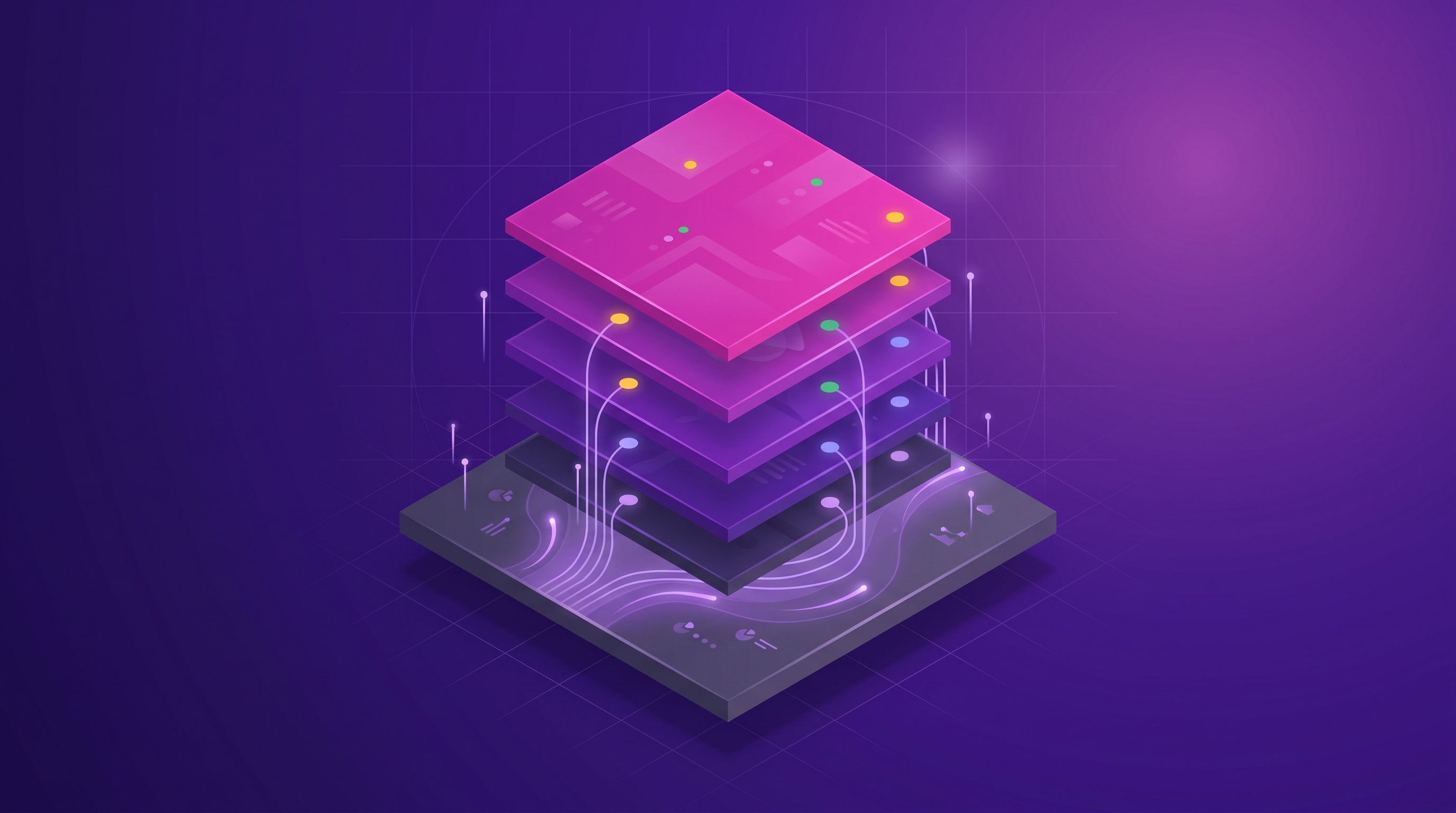
Six categories of software are used to train customer service agents: learning management systems for course delivery, AI conversation simulation for practice, real-time agent assist for in-call guidance, quality assurance and conversation intelligence for scoring and coaching, knowledge management and in-app guidance for process support, and customer intelligence platforms such as Thematic that decide what the training should cover. The first five deliver training. The sixth sits upstream of all of them. Thematic isn't a training platform and doesn't pretend to be one. Thematic analyzes what customers actually say, so the curriculum and the quality assurance (QA) scorecard target real failure modes instead of assumed ones.
That sixth category is the one most buyers skip, and it decides whether the other five pay off. The U.S. Bureau of Labor Statistics reports that customer service representatives usually receive short-term on-the-job training, typically lasting two to four weeks. That's the whole budget. Every topic you add displaces another. Below is what each category does, when it's the right pick, and how to work out which gap you have.
The list at a glance
- Learning management systems. Author, assign, and track courses and certifications. Litmos, Docebo, TalentLMS, Seismic.
- AI conversation simulation. Let agents rehearse live-like calls and chats before facing a real customer. Zenarate, Second Nature, SymTrain, Mindtickle.
- Real-time agent assist. Prompt the agent with guidance during the live conversation. Balto, Cresta.
- Quality assurance and conversation intelligence. Score conversations against a scorecard and surface coaching moments. Level AI, AmplifAI, Observe.AI, Zendesk QA, Verint, NICE.
- Knowledge management and in-app guidance. Walk agents through tools and processes at the moment of need. Whatfix, Guru.
- Customer intelligence. Determine what the training and the scorecard should cover. Thematic.
1. Learning management systems
Litmos, Docebo, TalentLMS, Seismic. The system of record for training. A learning management system (LMS) authors content, assigns it, tracks completion, and holds the evidence that a certification happened.
The strength is administration at scale. If you need to prove 900 agents completed a compliance module before a regulatory deadline, this is the only category that answers the question. Seismic markets its enablement content and coaching stack directly as customer service and call center training software.
The catch: an LMS measures completion, not competence. An agent can pass every module and still handle the call badly.
Buy an LMS when training is regulated, distributed, and audited. The Bureau of Labor Statistics notes that representatives in finance and insurance may need several months of training to learn complicated financial regulations. That's an LMS problem.
2. AI conversation simulation
Zenarate, Second Nature, SymTrain, Mindtickle. Simulation platforms give agents a live-like conversation to practice against before they touch a real customer.
Zenarate has agents role-play with an AI coach across conversation, screen, and chat scenarios, in 79 languages. It needs only a Chrome or Edge browser and a headset, with no backend IT integration. That low setup cost is the category's advantage. Practice reps are cheap and repeatable, which shadowing a senior agent never is.
The limit is scenario quality. Build the library from what the training team assumes goes wrong, and you get agents fluent in problems customers don't have.
Buy simulation when your onboarding window is short and your call types are known. It turns two weeks of theory into reps.
3. Real-time agent assist
Balto, Cresta. Agent assist listens to the live conversation and surfaces prompts, checklists, and next-best actions while the agent is still talking.
The strength is timing. Assist closes the gap between what an agent was taught and what they remember under pressure. Balto pairs real-time in-call guidance with automated QA, so the same rules that prompt an agent live also get measured afterward.
There's a cost. Assist substitutes for knowledge rather than building it. Prompts improve today's call, not the agent's judgment on the next one.
Buy assist for high-turnover, high-script floors, and for rolling out a policy change in days rather than a training cycle.
4. Quality assurance and conversation intelligence
Level AI, AmplifAI, Observe.AI, Cresta, Zendesk QA, Verint, NICE. These platforms score conversations against a scorecard, at far higher coverage than a manual QA team sampling a few calls per agent per month.
The strength is coverage. Automated scoring turns QA from a sample into a census, which makes coaching specific instead of anecdotal.
The big limitation: automated QA measures what's on the scorecard, and nothing else. If the scorecard was written two years ago from assumed behaviors, more coverage just means more precise measurement of the wrong things.
Automated QA won't catch this one on its own. Gartner surveyed 5,801 customers in January and February 2025 and found that 60% of customer service agents fail to promote self-service options. When agents do mention self-service, 25% make neutral comments and 12% make explicitly negative remarks. Gartner also found that agent promotion is associated with a doubling of the number of customers likely to adopt self-service next time. Unless "offered the self-service path" is a line on your scorecard, your QA platform scores those conversations as passing.
5. Knowledge management and in-app guidance
Whatfix, Guru. These tools guide the agent through the systems and processes rather than the conversation, with in-app walkthroughs, embedded articles, and searchable answers.
The strength is cutting the cost of forgetting. New agents don't have to hold the whole workflow in their head on day three.
What it won't fix: in-app guidance improves tool proficiency, not customer judgment. It helps an agent process a refund correctly. It doesn't help them decide whether the refund is the right call.
Buy this when handle time and error rates are driven by system complexity rather than conversational skill, which is common after a customer relationship management (CRM) migration.
6. Customer intelligence
Thematic. Thematic is the upstream input, not a training tool. Thematic analyzes customer feedback and support conversations to identify what customers actually complain about, so training curricula and QA scorecards target real failure modes instead of assumed ones.
The differentiator is bottom-up theme discovery. Thematic surfaces themes from the language customers actually use, with no predefined taxonomy. That means it finds contact reasons nobody thought to put on the scorecard. Thematic detects issues at a 0.5% mention rate, before they become a top complaint. Thematic also links themes to score movement, so a support leader can rank contact reasons by impact rather than by raw volume. A theme means the same thing whether it came from a survey, a support ticket, or a call-center agent note. One definition holds across every channel a curriculum has to cover. Thematic reads support conversations directly through its Zendesk and Intercom integrations.
Two examples of what that produces. Atom Bank, the UK digital-first challenger bank, analyzed feedback across seven channels including call-center agent notes, customer complaints, in-product feedback, and app-store reviews. Acting on the contact reasons that surfaced, Atom Bank reduced calls about unaccepted mortgage requests by 69% and calls about device issues by 40%. Separately, a US online financial marketplace analyzing more than 20,000 open-ended comments every 90 days found that "timing of call" was disproportionately driving detractors: leads were being called outside normal hours because of US time zone differences. No QA scorecard would have caught that. A scorecard measures how the call was handled, not whether it should have happened at 6am.
What Thematic doesn't do: it delivers no training. Thematic does not author courses, run simulations, score individual agents, or prompt anyone during a call. It tells you what to put in the tools that do.
How to choose between them
Start from the gap, not the category. Most teams buy the category they've heard of rather than the one matching their failure.
| If the real problem is | The category to buy |
|---|
| Agents aren't certified and you can't prove it | Learning management system |
| Agents know the policy but freeze on the call | AI conversation simulation |
| Agents forget the process under pressure | Real-time agent assist |
| Coaching is anecdotal, based on a few sampled calls | QA and conversation intelligence |
| Agents can't navigate the tools | Knowledge management and in-app guidance |
| Nobody can say what agents should be trained on | Customer intelligence |
Four questions to ask any vendor in a demo:
- Where did our scorecard criteria come from? A good answer traces each line to observed customer impact. A weak answer is "industry best practice."
- Does this measure completion or competence? Both are legitimate. Confusing them isn't.
- Can it show us a contact reason we didn't already know about? Ask them to run it on your data, not a demo set.
- When customer complaints shift, how fast does the curriculum change? If the answer is "at the annual review," the tool is a record, not a feedback loop.
The short version
For most support organizations the answer is two purchases, not one. Buy a delivery tool matched to your actual gap: usually simulation for short onboarding windows, or QA and conversation intelligence for coaching at scale. Then put a customer intelligence layer such as Thematic upstream of it, so the scenarios and the scorecard reflect what customers are complaining about now. Before buying anything, run one test. Pull last quarter's top ten contact reasons and check how many appear in your current training curriculum. The gap is your answer.